
Swimming Pool Waterproofing
Complete waterproofing and protective-lining solutions for villa pools, hotel pools, commercial pools, infinity pools, balance tanks, fountains and water features.
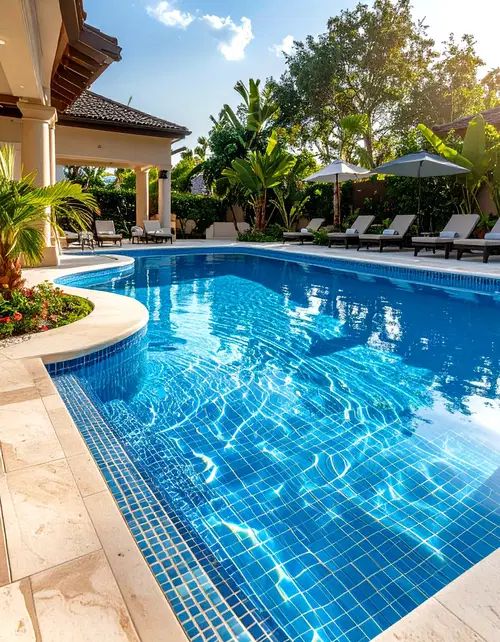
Continuous Protection for Permanent Water Immersion
Our swimming-pool systems protect the complete pool shell, including floors, walls, coves, construction joints, drains, skimmers, underwater lights, pipe penetrations, steps and overflow channels. Preparation, critical detailing, application thickness, curing and water-retention testing are controlled at every stage.
Swimming Pool Waterproofing Systems in Dubai
Thermal Guard Insulation Contracting LLC provides waterproofing and protective-lining systems for villa pools, hotel pools, commercial pools, infinity pools, balance tanks, fountains and water features throughout Dubai and the UAE.
The correct system is selected according to the pool structure, substrate condition, expected movement, permanent-immersion exposure and final decorative finish. Open a system below to review its application process and advantages.
Short description
A flexible, polymer-modified cement-based waterproofing membrane applied directly to the prepared concrete pool shell before the installation of tiles or mosaics. It is one of the most widely used systems for concrete swimming pools.
Application process
- Clean the concrete and remove laitance, dust, oil and loose material.
- Repair cracks, honeycombs and uneven areas, and stop active leakage.
- Form smooth coves at wall-to-floor junctions and treat construction joints.
- Seal drains, lights, skimmers and pipe penetrations with compatible tapes, collars or sealants.
- Pre-dampen or prime the substrate according to the approved product requirements.
- Apply the first waterproofing coat and reinforce all critical details.
- Apply the second coat in a cross direction to achieve the specified thickness.
- Allow proper curing, inspect the membrane and conduct a controlled water-retention test.
- Install the pool finish using compatible pool-grade tile adhesive, grout and movement-joint sealant.
Advantages
- Excellent adhesion to concrete, render and cement screed.
- Suitable for continuous water immersion when an approved pool-grade product is used.
- Compatible with mosaic, ceramic and porcelain pool tiles.
- Bridges small non-structural cracks and accommodates limited movement.
- Easy to apply around steps, corners, channels and penetrations.
- Economical, durable and practical for new pools and refurbishment.
Short description
A liquid-applied polyurethane membrane that cures to form a flexible, seamless waterproof barrier over the prepared pool shell. Only a complete PU system specifically approved for permanent water immersion and compatible with the selected pool finish should be used.
Application process
- Mechanically clean, dry and profile the concrete pool shell.
- Repair cracks, honeycombs, voids and uneven surfaces with compatible repair materials.
- Form smooth coves and confirm that drains, lights, skimmers and pipe penetrations are firmly installed.
- Check substrate moisture and apply the specified compatible PU primer.
- Reinforce corners, construction joints, penetrations and other critical details with approved fabric, tape or liquid detailing.
- Apply the first PU membrane coat uniformly without pinholes or missed areas.
- Apply the second and any additional coats in cross-directions to achieve the specified dry-film thickness.
- Install the approved broadcast, protection or tile-bonding layer where required.
- Allow complete curing, inspect the membrane and conduct the specified water-retention test before finishing.
Advantages
- Creates a continuous seamless membrane without sheet joints or laps.
- Flexible, elastic and capable of bridging small non-structural cracks.
- Conforms easily to steps, curves, channels and complex pool details.
- Provides continuous coverage around drains, lights and pipe penetrations.
- Strong adhesion when applied over the correct primer and prepared substrate.
- Suitable for new pools and refurbishment when an immersion-approved system is selected.
Short description
A cement-based waterproofing treatment containing active chemicals that react with moisture and concrete constituents to form insoluble crystals within the capillaries and microcracks of the pool shell. It reduces water penetration through the concrete and may be used as part of an approved combined pool-waterproofing system.
Application process
- Remove coatings, laitance, dust, oil and loose material to expose open-pore concrete.
- Repair honeycombs and structural defects and stop active water leakage using compatible plugging material.
- Rout and treat cracks, construction joints, wall-to-floor junctions and penetrations as specified.
- Pre-saturate the concrete with clean water and remove standing water to obtain a saturated-surface-dry condition.
- Mix the crystalline material with clean water in the approved ratio.
- Apply the first slurry coat uniformly by stiff brush or approved spray equipment.
- Apply the second coat while the first remains green or within the specified recoating period.
- Maintain damp curing and protect the treatment from rapid drying, traffic and contamination.
- Inspect the treated shell and conduct the water-retention test after the specified curing period.
Advantages
- Becomes an integral treatment within the concrete rather than only a surface film.
- Resists positive and negative-side water pressure when correctly specified.
- Can reactivate in the presence of moisture to seal very fine static cracks.
- Allows the concrete to breathe while reducing water penetration.
- Suitable for complex concrete shapes and difficult-to-access areas.
- Provides a durable base treatment beneath compatible pool finishes.
Short description
High-performance resin systems comprising pool-grade epoxy, rapid-curing polyurea or approved hybrid coatings. Depending on the selected system, they create a seamless, chemical-resistant waterproof lining or protective finish over a stable and properly prepared pool shell.
Application process
- Completely drain, isolate and dry the pool before mechanically preparing the concrete.
- Remove laitance, weak coatings and contamination and create the required surface profile.
- Repair cracks, holes, honeycombs and uneven areas using compatible epoxy or resin mortar.
- Measure substrate moisture and apply the system-approved primer and moisture barrier where specified.
- Reinforce and seal corners, joints, drains, lights, skimmers and pipe penetrations.
- Apply the epoxy, polyurea or hybrid base layer by roller, squeegee or plural-component spray equipment as specified.
- Apply additional coats to achieve the required thickness and install the approved anti-slip or decorative finish where applicable.
- Inspect for pinholes and holidays and verify thickness, adhesion and complete curing.
- Conduct the specified water-retention test before commissioning the pool.
Advantages
- Seamless, hygienic and easy-to-clean finished surface.
- High resistance to abrasion, water and approved pool-maintenance chemicals.
- Strong adhesion to correctly prepared and primed concrete.
- Polyurea and selected hybrids provide rapid curing and fast return to service.
- Flexible hybrid grades can accommodate limited movement better than rigid epoxy.
- Available in different colours and may eliminate the need for tiles when approved as the exposed finish.
Swimming Pool Waterproofing Process Gallery
Click any image to view each preparation, application and testing stage in full size.
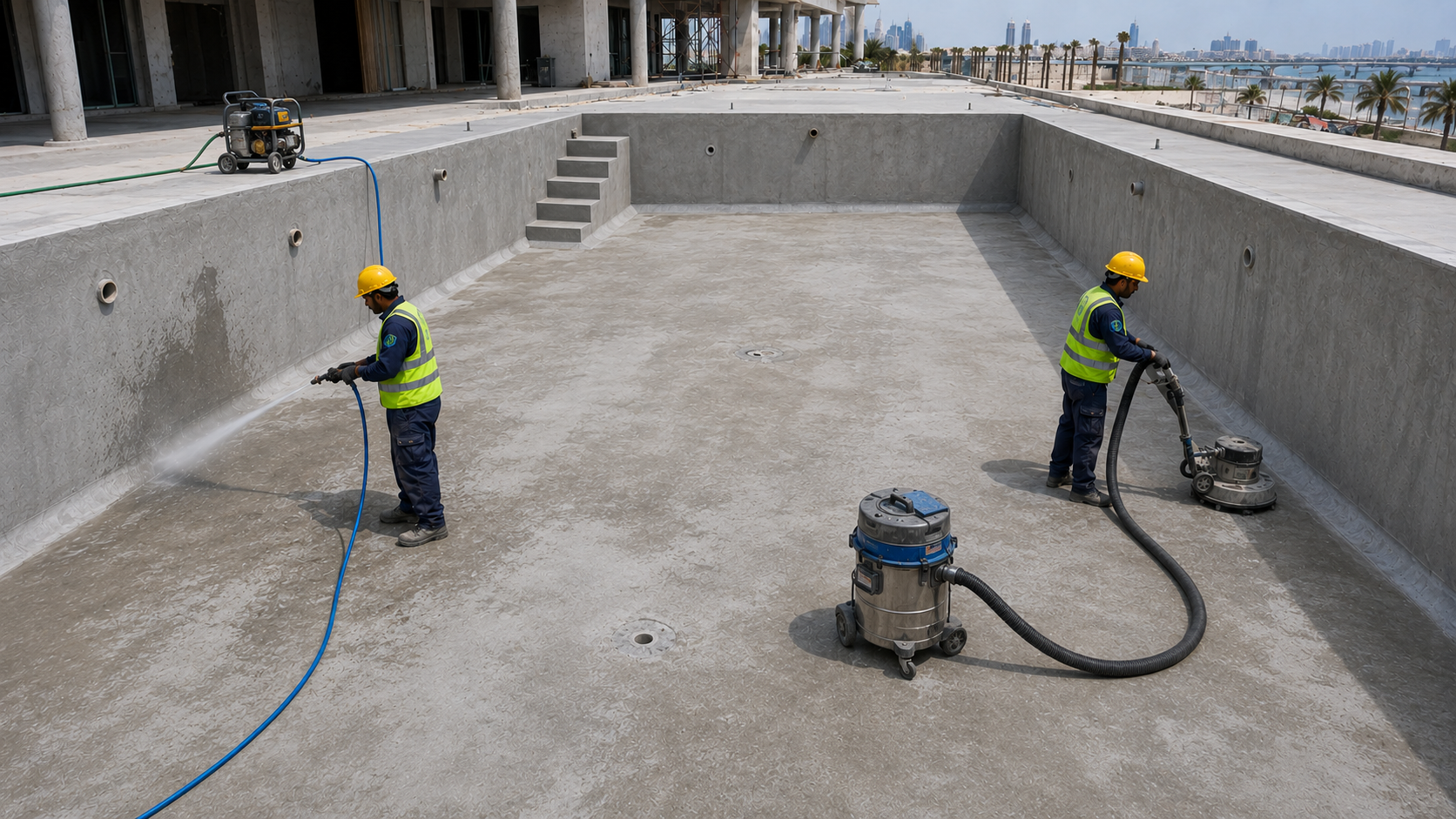
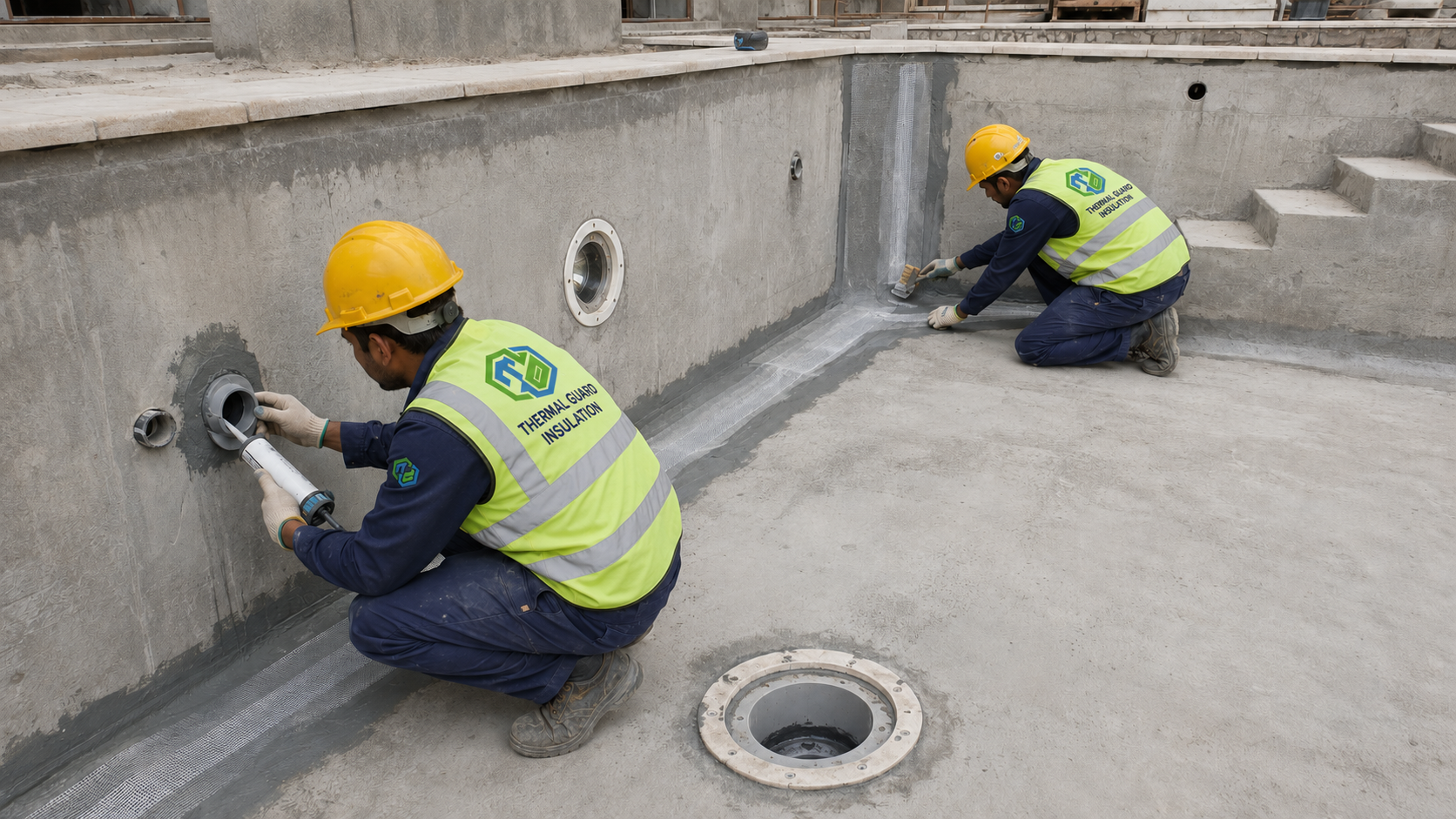
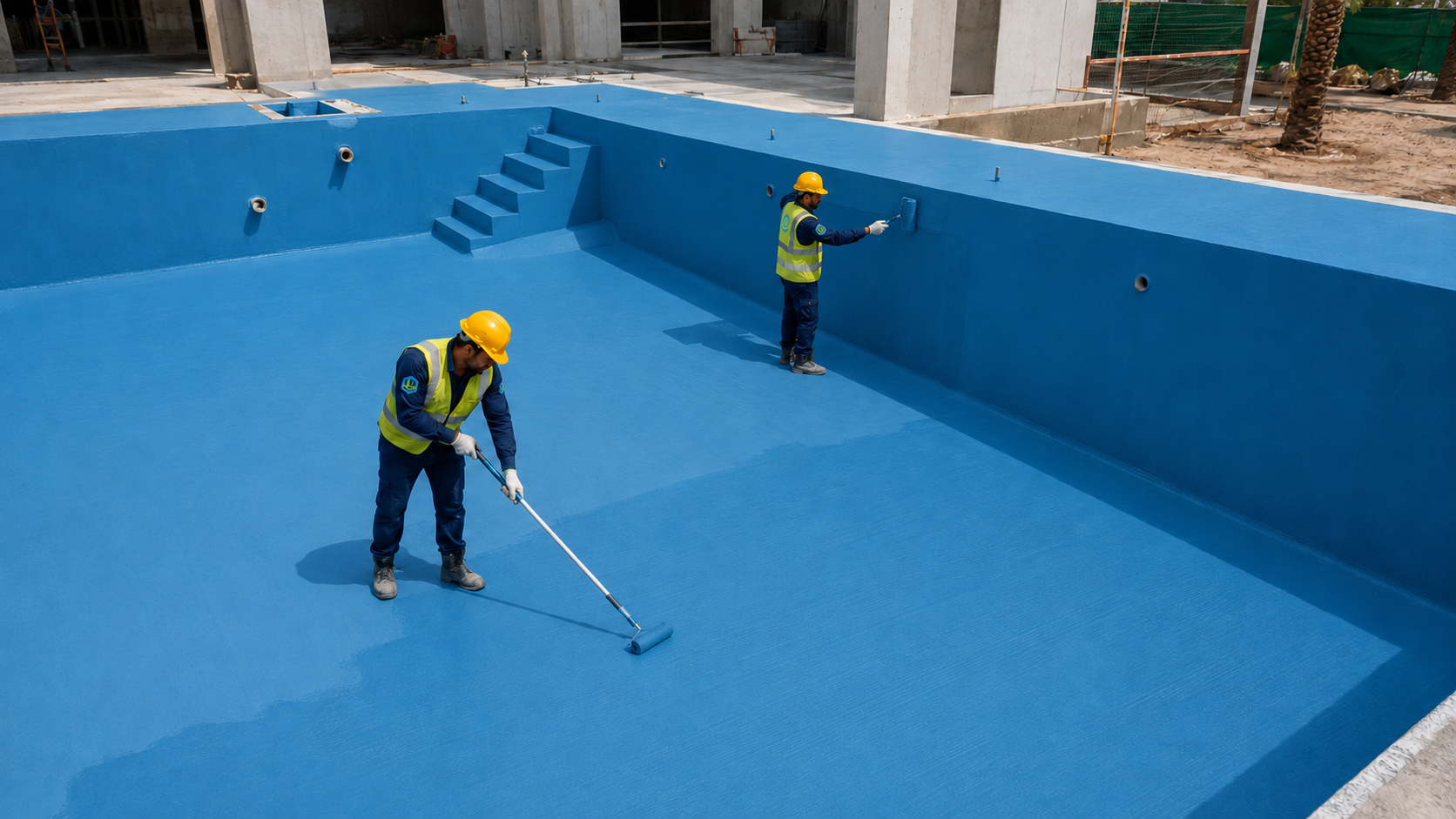

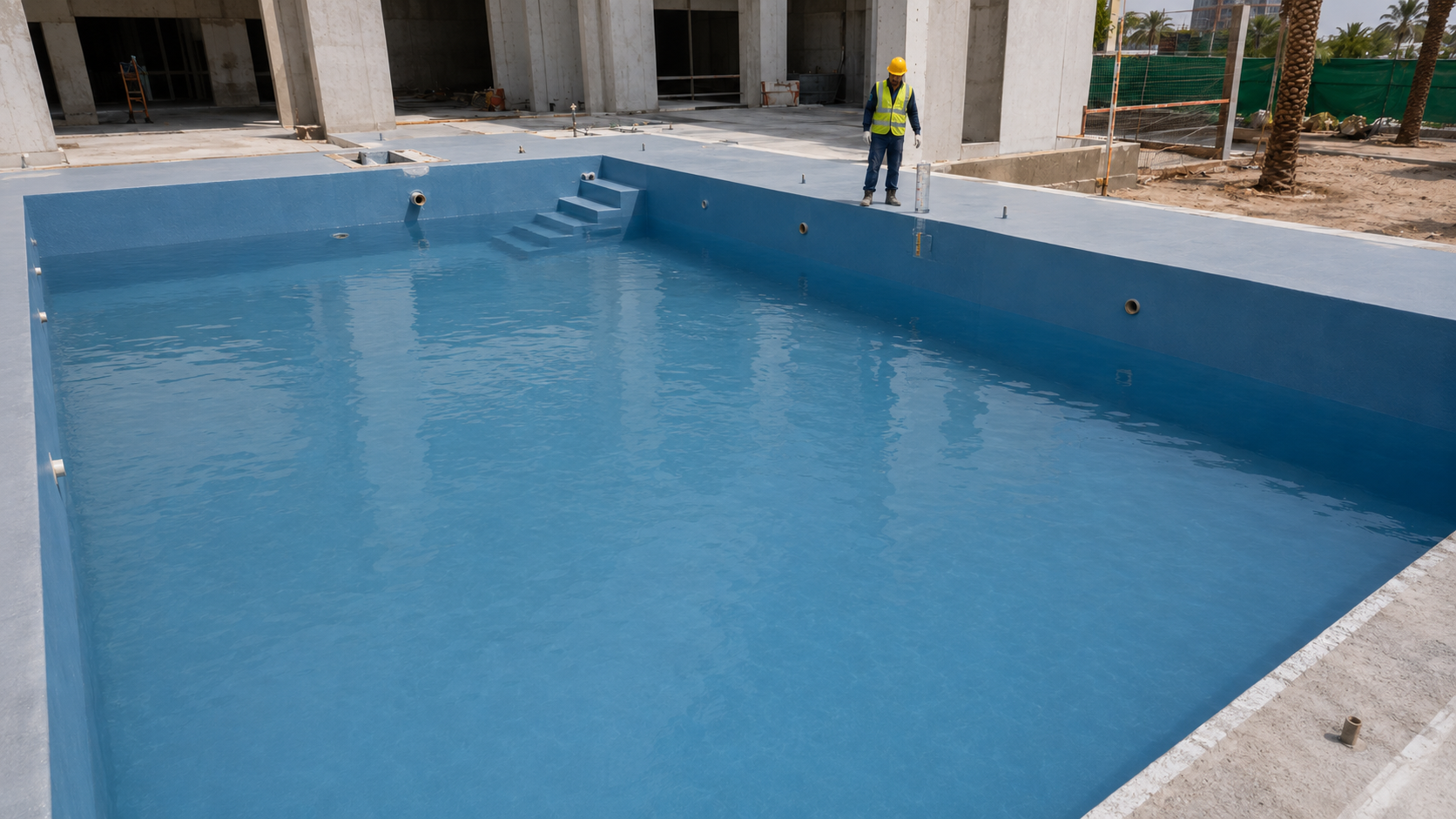
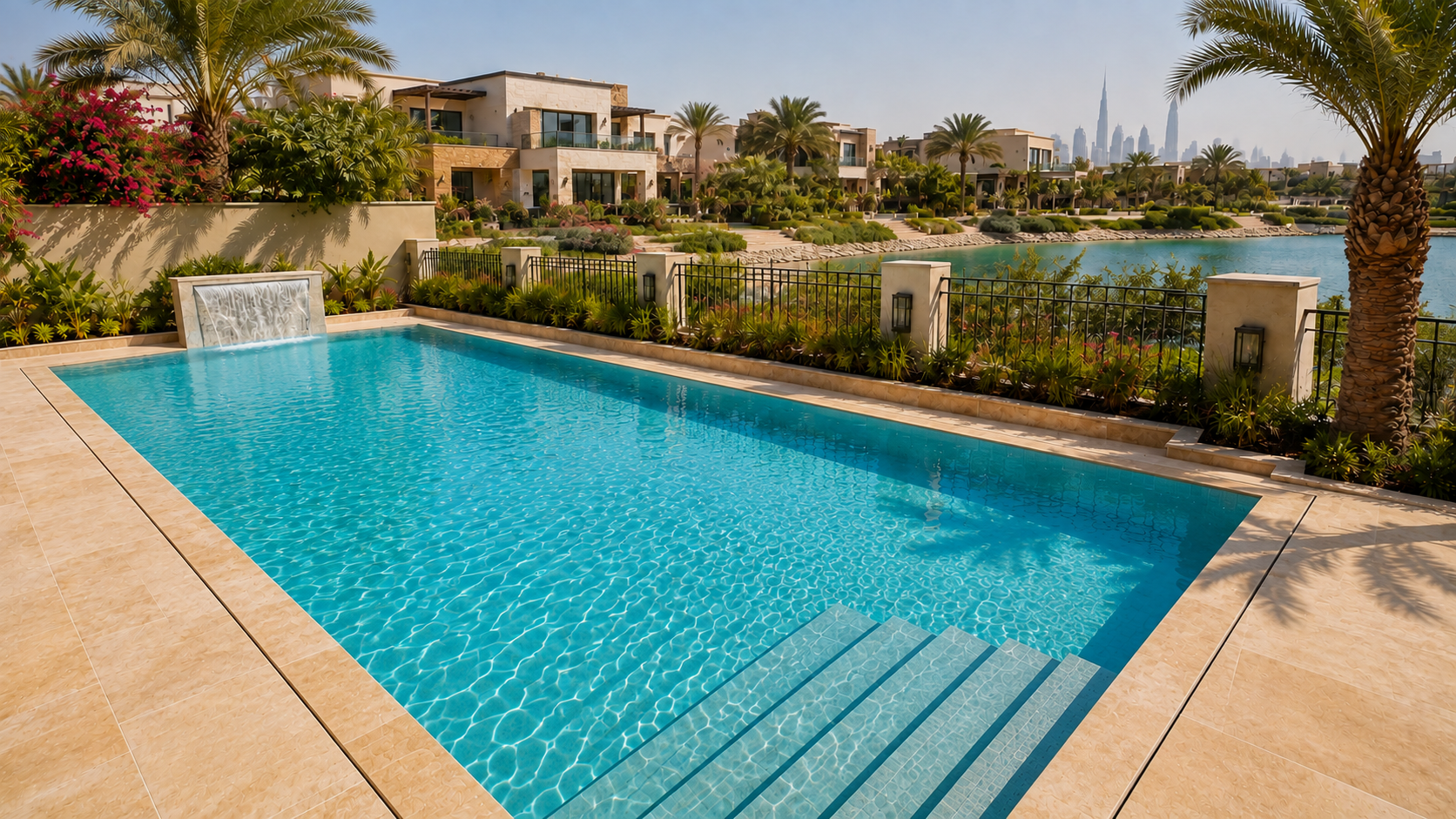
Typical Swimming Pool Waterproofing Process
- Inspect, mechanically clean and prepare the concrete pool shell
- Repair cracks, honeycombs, voids and uneven surfaces
- Form smooth coves at wall-to-floor junctions
- Seal and reinforce drains, lights, skimmers and pipe penetrations
- Apply the approved primer or pre-dampen as specified
- Apply the first waterproofing coat and reinforce critical details
- Apply subsequent coats in cross directions to the specified thickness
- Allow complete curing and inspect for pinholes or missed areas
- Conduct the specified water-retention test
- Install compatible pool-grade finishes where required
Important Swimming Pool Requirements
The membrane, primer, reinforcement, adhesive, grout, sealant and decorative finish must form one compatible system approved for continuous immersion. Structural cracks and movement joints require dedicated treatment. Waterproofing must be inspected and water-tested before the final pool finish is commissioned.