
Flooring Systems
Durable resin, cementitious, traffic-bearing and decorative flooring systems engineered for abrasion, impact, hygiene, chemicals, slip resistance and architectural appearance.

Purpose-Built Flooring for Every Operational Requirement
A flooring system combines mechanical substrate preparation, repairs, compatible primer, build-up layers and a selected finishing coat to create a strong, safe and durable walking or driving surface. The build-up is matched to traffic, impact, chemical, hygiene, thermal and slip-resistance requirements.
Industrial, Commercial & Decorative Flooring Systems
A flooring system is a complete group of materials installed over concrete to provide a strong, smooth, safe, hygienic or decorative finished surface. Typical systems include substrate preparation, crack and joint repair, primer, base coat, intermediate or build-up layer, topcoat and anti-slip texture or line marking where required.
The correct flooring system depends on traffic, abrasion, impact, chemical exposure, temperature, cleaning regime, moisture, slip resistance and appearance. Open a system below to review its applications, advantages and limitations.
Epoxy Flooring Process Gallery
Click any image to view preparation, coating and completed car-park finishes in full size.
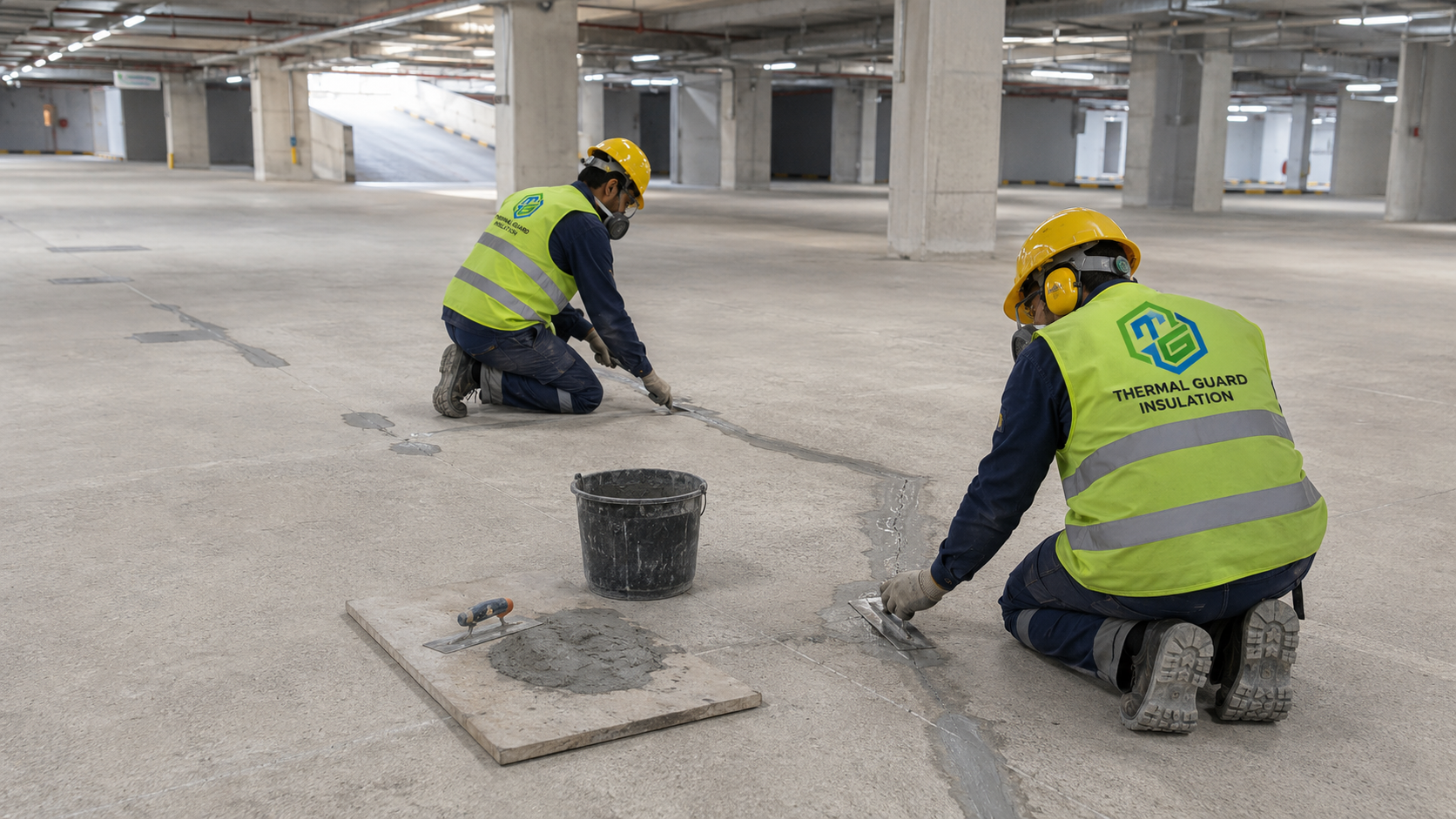

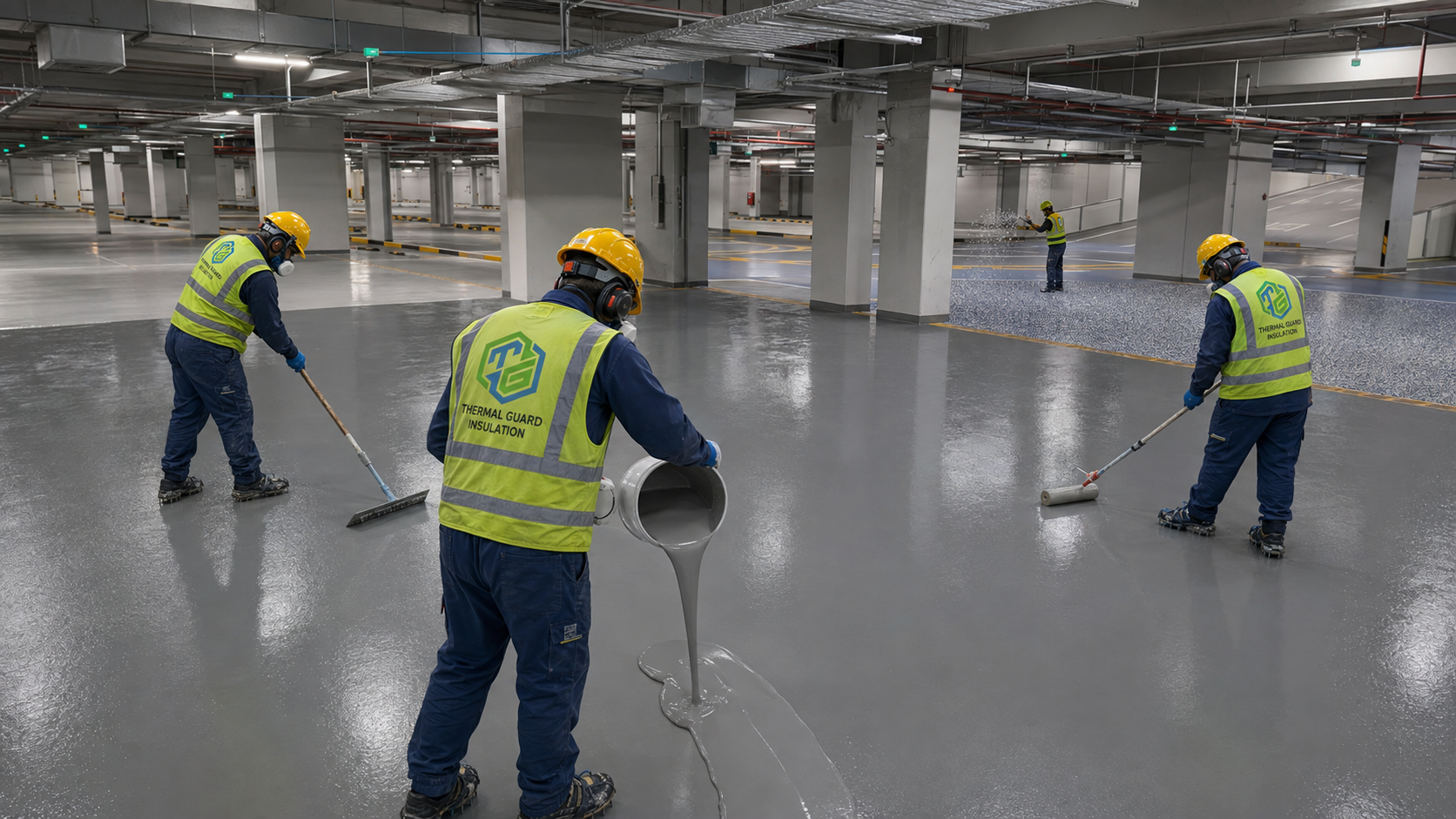
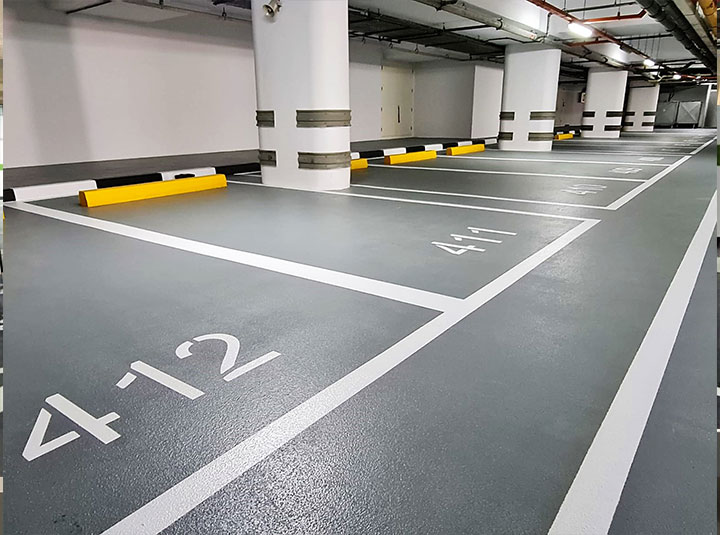
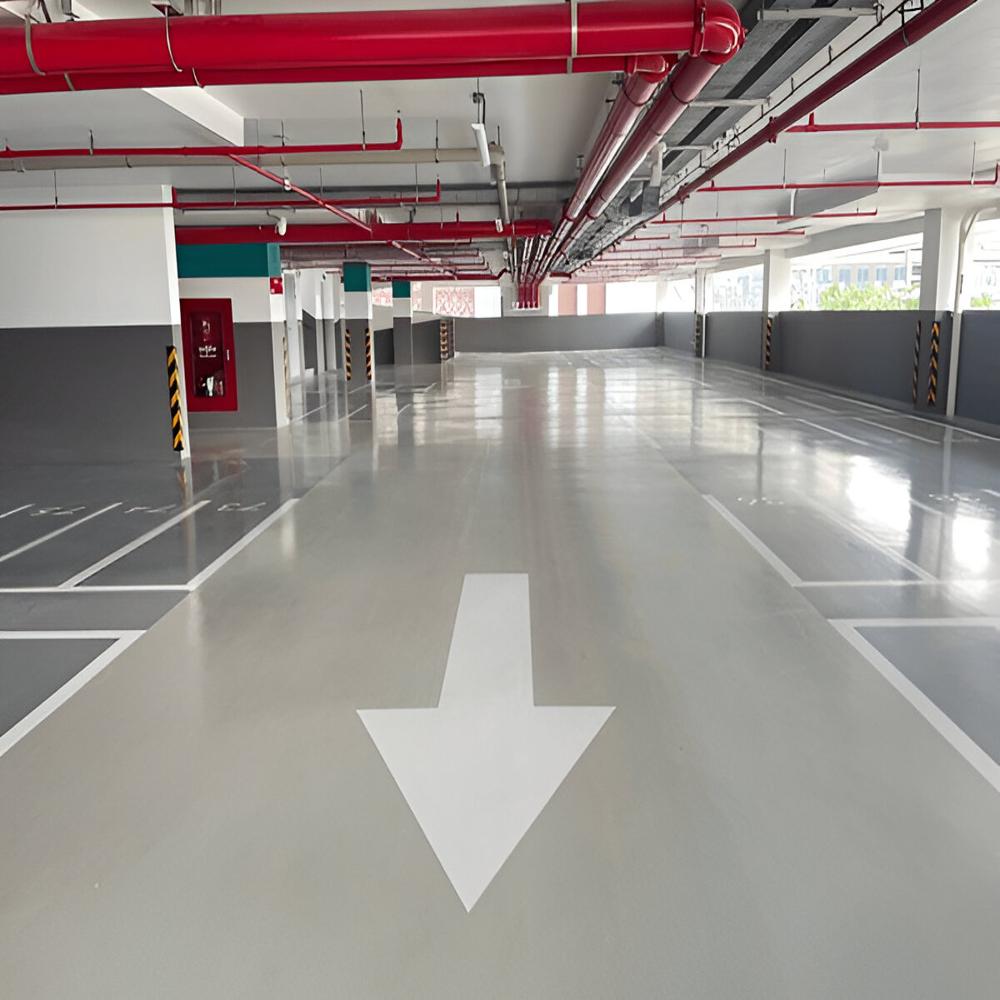
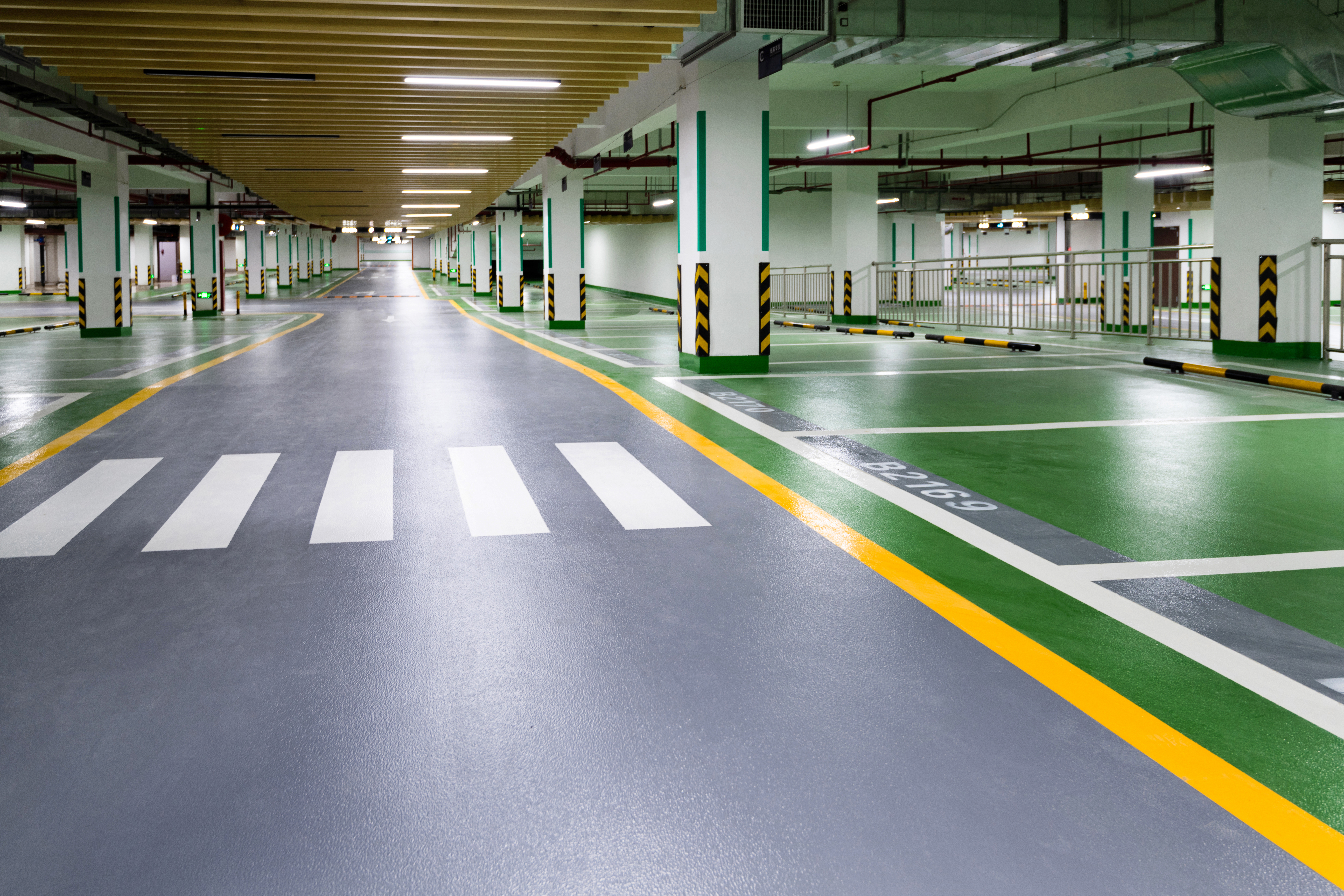
Typical Epoxy Flooring Installation Process
- Inspect concrete strength, moisture, contamination and existing defects
- Mechanically grind or shot-blast the floor to the required profile
- Vacuum-clean and remove all dust, oil, laitance and weak material
- Repair cracks, joints, holes and damaged concrete
- Apply the compatible epoxy primer and repair pinholes
- Install the specified base coat, aggregate or build-up layer
- Apply intermediate and final coats at the approved thickness
- Create the specified anti-slip texture where required
- Install parking lines, numbers, arrows and colour zoning after curing
- Complete final inspection before opening the floor to traffic
Important Flooring Requirements
Concrete moisture, substrate strength, surface profile, repair compatibility, material mixing ratio, pot life, application temperature, consumption, thickness, curing and slip resistance must comply with the approved project requirements. Structural joints must remain functional and must not be rigidly bridged by the resin floor.