
Metal Sheet Waterproofing
Professional waterproofing, sealing and protective-coating systems for corrugated metal roofs, standing-seam roofs, sandwich panels, warehouses, factories and commercial buildings.
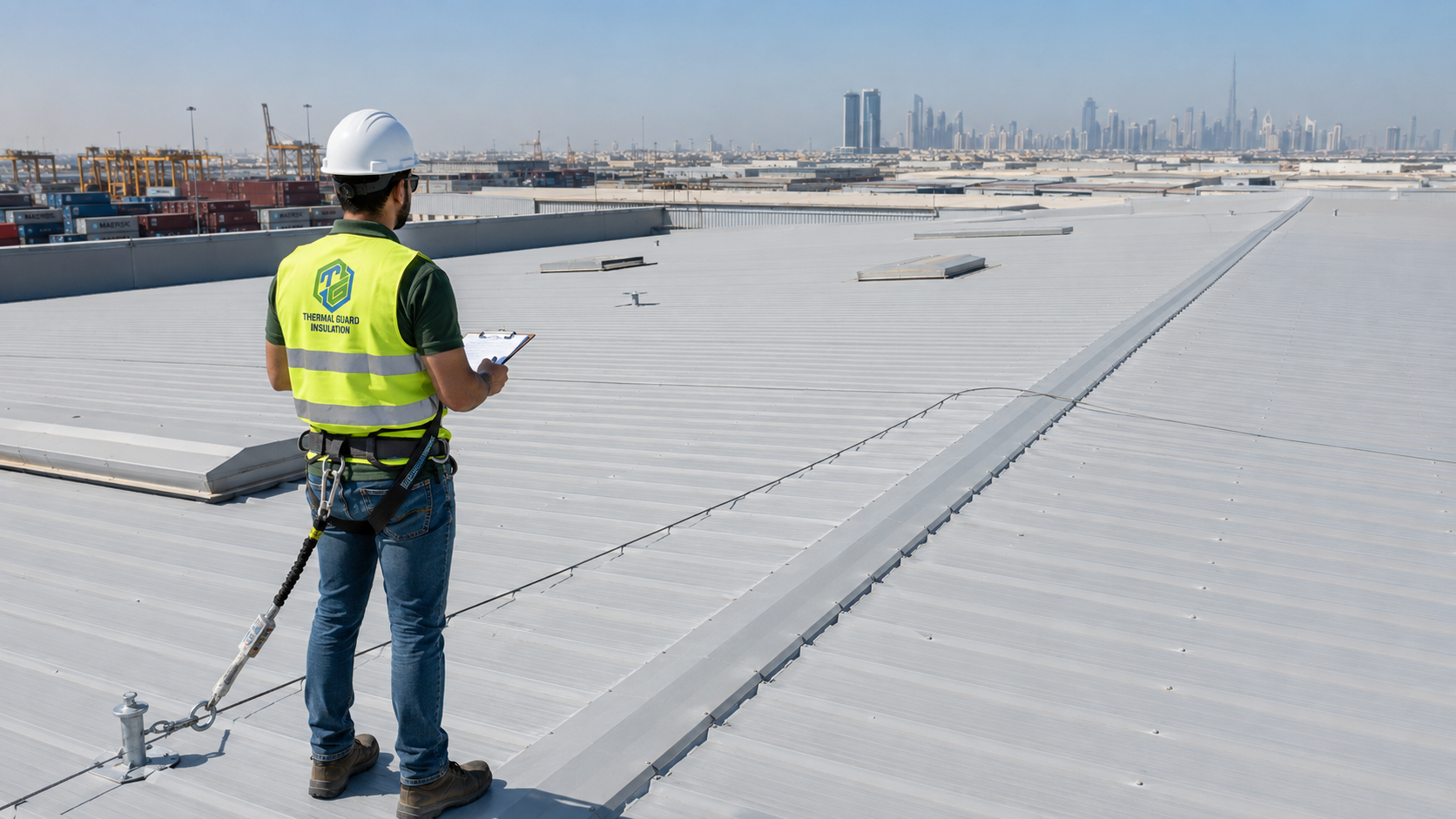
Flexible Waterproofing for Thermally Moving Metal Roofs
Our corrugated-sheet waterproofing systems seal roof laps, fasteners, skylights, gutters, flashings, penetrations and wall junctions while accommodating normal expansion and contraction. Each installation includes preparation, corrosion treatment, critical-detail reinforcement and compatible protective coating.
Metal Sheet & Corrugated Roof Waterproofing in Dubai
Thermal Guard Insulation Contracting LLC provides waterproofing and protective systems for corrugated metal roofs, standing-seam roofs, sandwich panels, warehouses, factories, workshops, canopies and commercial buildings throughout Dubai and the UAE.
Metal roofs expand and contract continuously, so the selected system must remain flexible while maintaining adhesion around sheet laps, fasteners, flashings, skylights, gutters, penetrations and terminations. Open a system below to review its installation process and advantages.
Short description
A flexible liquid-applied polyurethane waterproofing coating installed over prepared corrugated sheets, standing-seam roofs and metal panels. After curing, it forms a seamless, elastic and weather-resistant membrane that follows the roof profile and accommodates normal thermal expansion and contraction.
Application process
- Inspect sheets, flashings, gutters, fasteners, laps and penetrations.
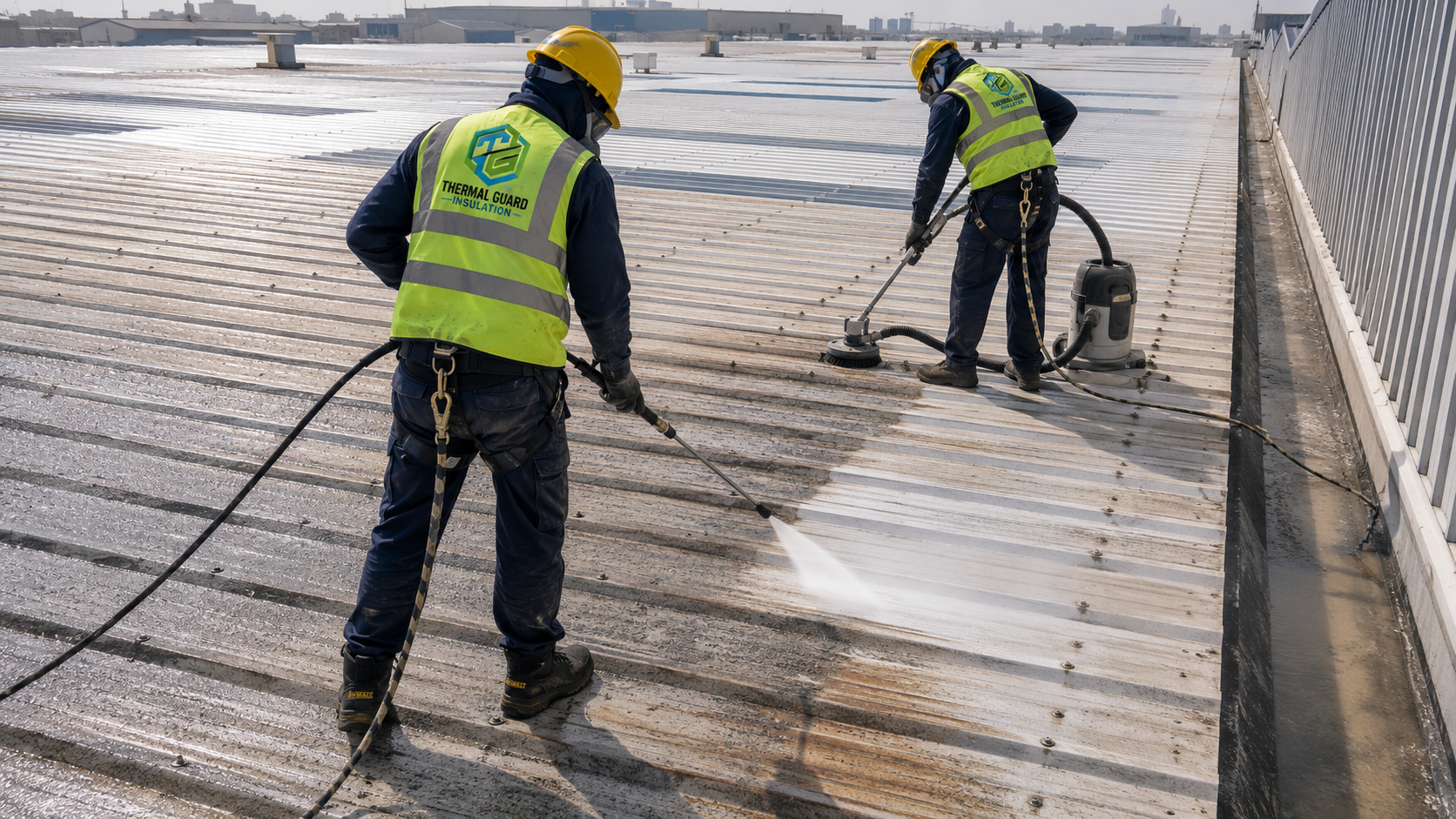
- Pressure-wash or mechanically clean the roof and remove dust, oil, loose coating and contamination.
- Remove corrosion and treat affected metal with a compatible anti-corrosion primer.
- Replace loose or damaged fasteners and seal screw heads, side laps, end laps and penetrations.
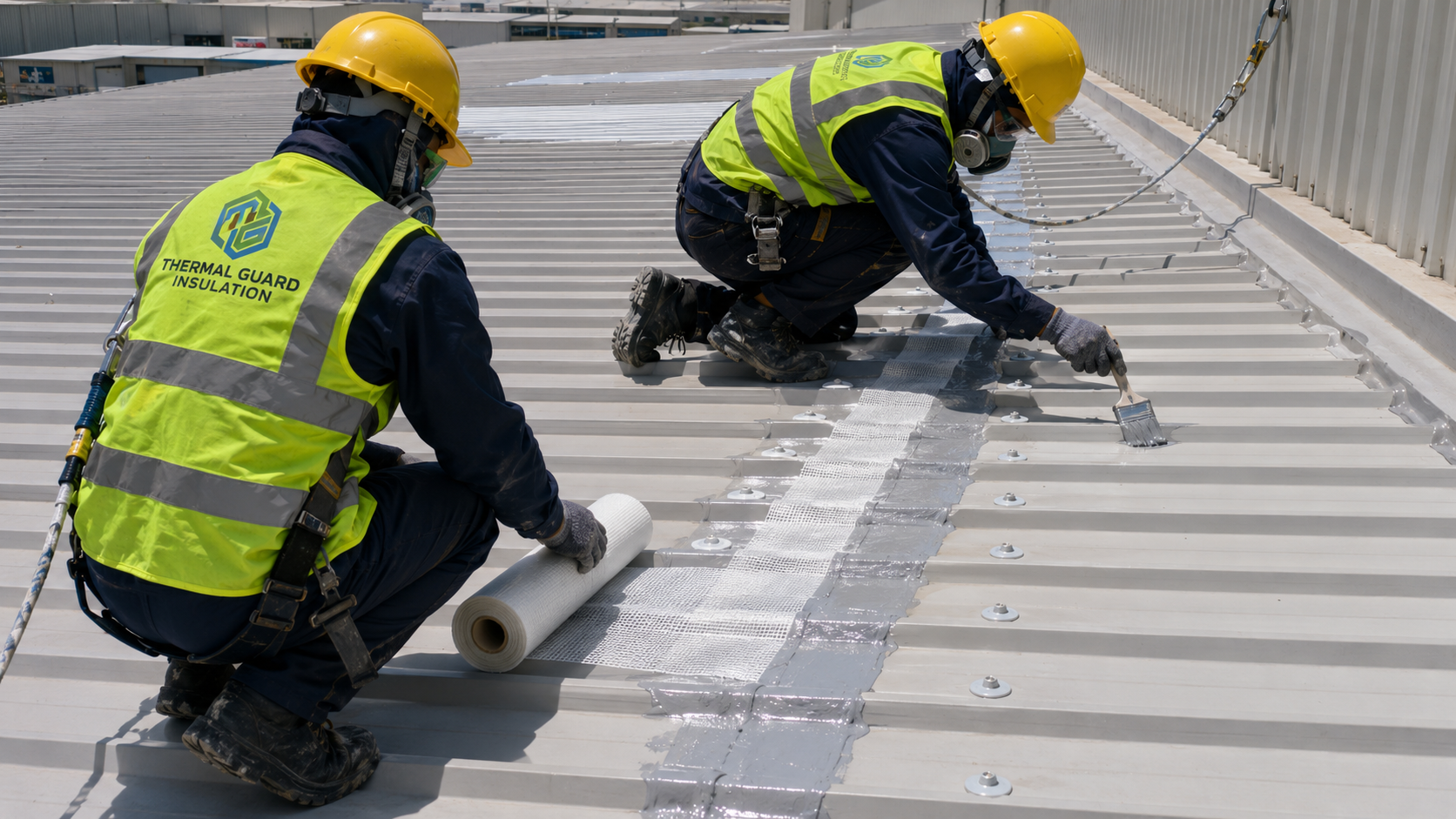
- Embed reinforcement fabric or mesh into the detail coating at joints and vulnerable locations.
- Apply the specified primer over the prepared roof.
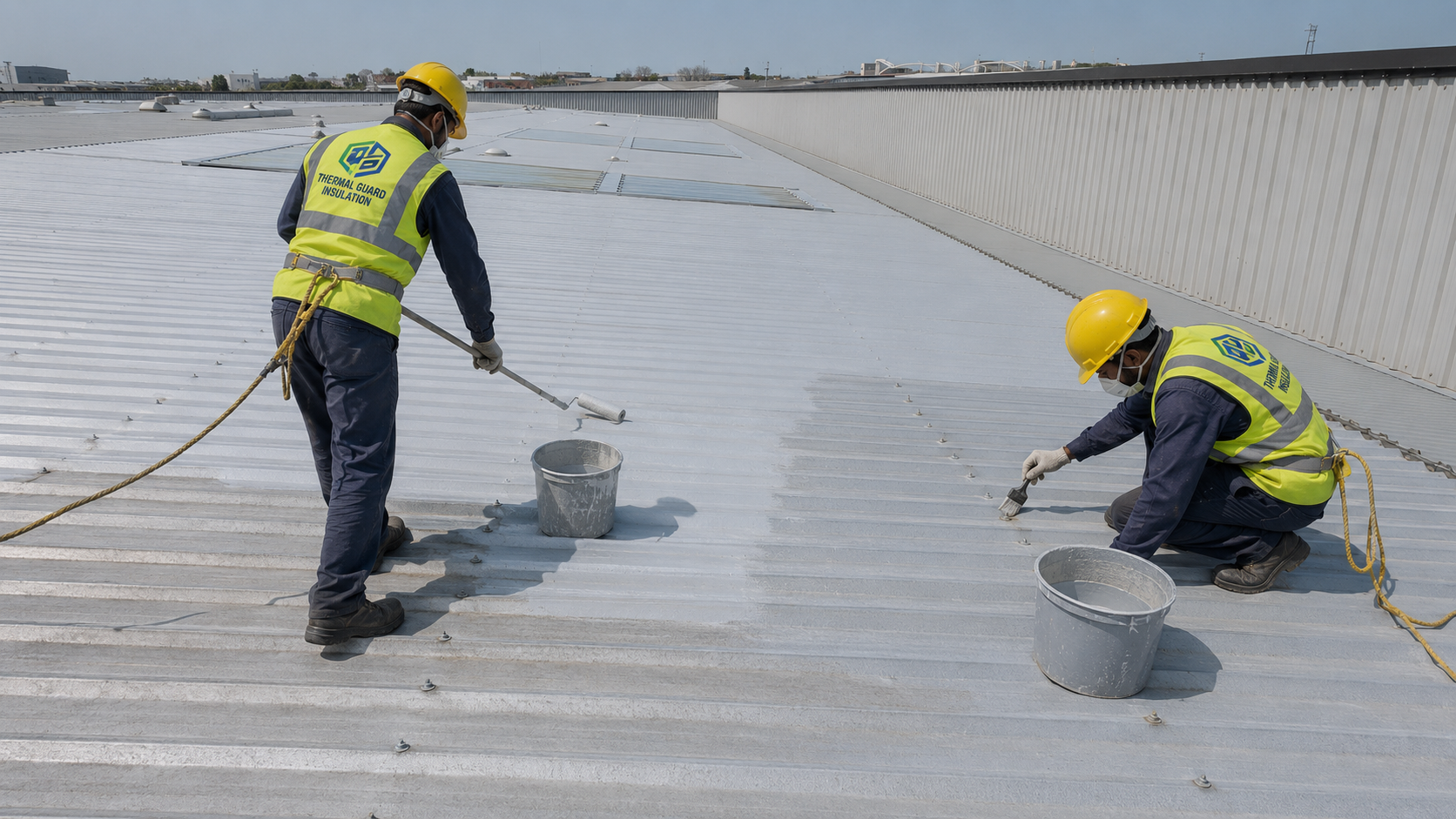
- Apply two or three PU membrane coats in cross directions to achieve the required dry-film thickness.
- Inspect coverage, allow complete curing and conduct controlled water testing where practical.
Advantages
- Seamless waterproofing over complex corrugated profiles.
- Flexible and able to accommodate normal expansion and contraction.
- Protects prepared metal against further corrosion.
- Easy detailing around fasteners, laps, flashings and penetrations.
- A compatible UV-stable, light-coloured finish can reduce roof surface temperature and cooling demand.
- Suitable for maintenance and refurbishment without removing the complete roof.
Short description
A closed-cell spray polyurethane foam system applied directly over the prepared metal roof to create continuous thermal insulation and help seal minor gaps, joints and irregular sheet profiles. The cured foam must be protected with an approved waterproof and UV-resistant elastomeric coating because exposed PU foam is not suitable as the final weathering surface.
Application process
- Inspect the roof sheets, structural supports, laps, fasteners, gutters, flashings and penetrations.
- Replace damaged or severely corroded sheets and tighten or replace loose fasteners.
- Pressure-wash and mechanically clean the roof to remove dust, oil, rust, loose coating and contamination.
- Treat prepared corrosion and apply the specified anti-corrosion or PU-compatible metal primer.
- Seal large openings and reinforce movement-sensitive laps, joints and penetrations with compatible flexible materials.
- Mask skylights, gutters, outlets, equipment and adjacent surfaces against overspray.
- Spray closed-cell PU foam uniformly in controlled passes to achieve the specified thickness and density.
- Trim excessive foam and correct pinholes, voids, soft areas or uneven locations.
- Apply the approved waterproof protective base coat followed by the UV-resistant elastomeric topcoat.
- Inspect foam thickness, adhesion and coating continuity and complete repairs before handover.
Advantages
- Provides continuous thermal insulation with very few joints.
- Conforms closely to corrugated profiles, curves and irregular roof details.
- Helps reduce heat transfer and cooling demand inside warehouses and factories.
- Closed-cell foam limits water absorption when properly installed and protected.
- Can reduce air leakage through minor gaps and improve indoor comfort.
- Adds little weight compared with many conventional insulation build-ups.
- Suitable for refurbishment where removing the complete metal roof is impractical.
Corrugated Sheet Waterproofing Process Gallery
Click any image to view preparation, detailing, coating and completed-roof stages in full size.
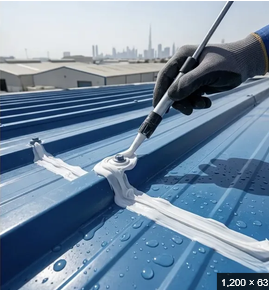
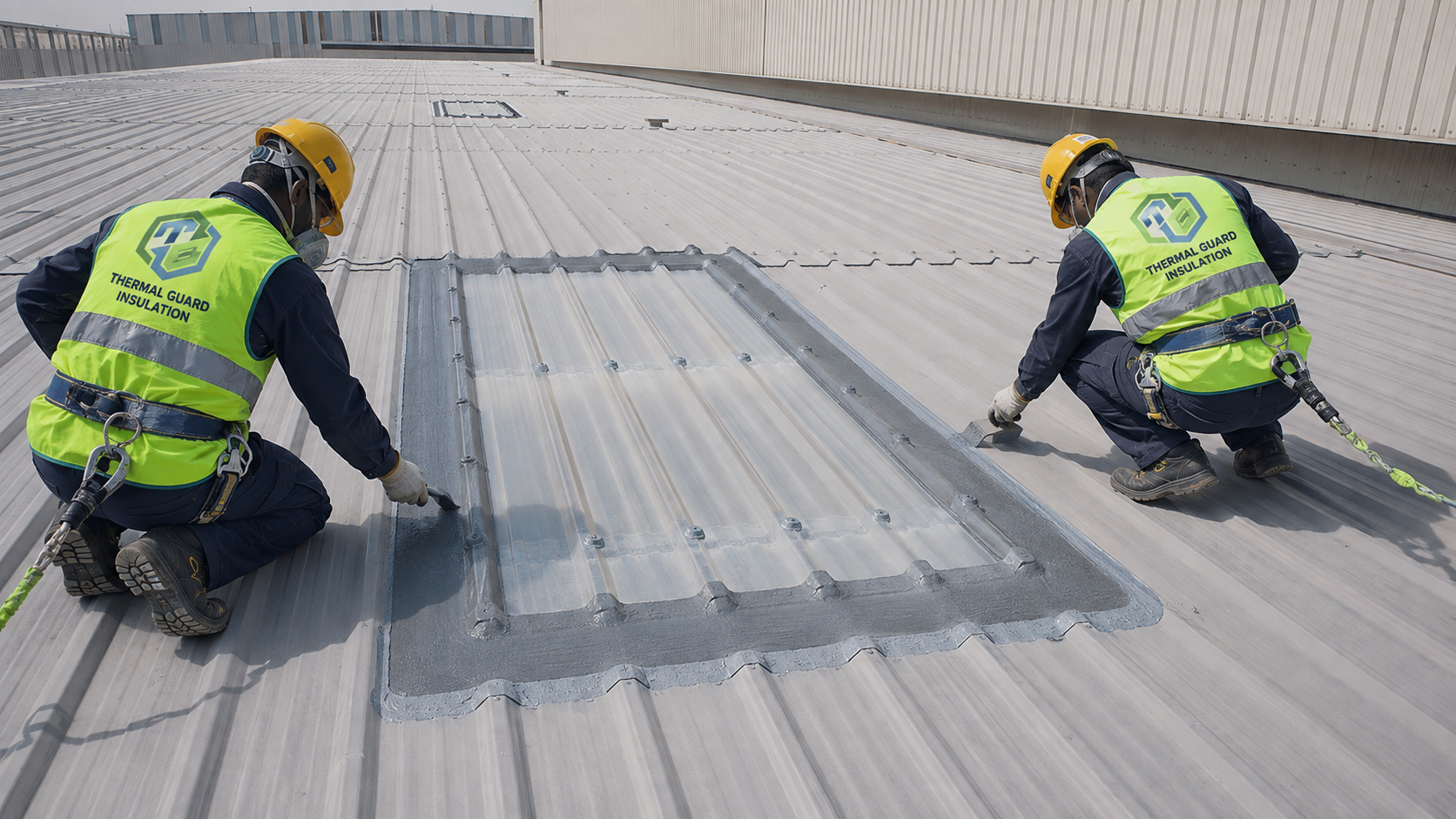
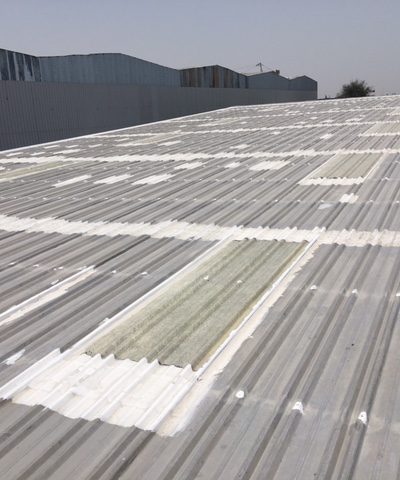
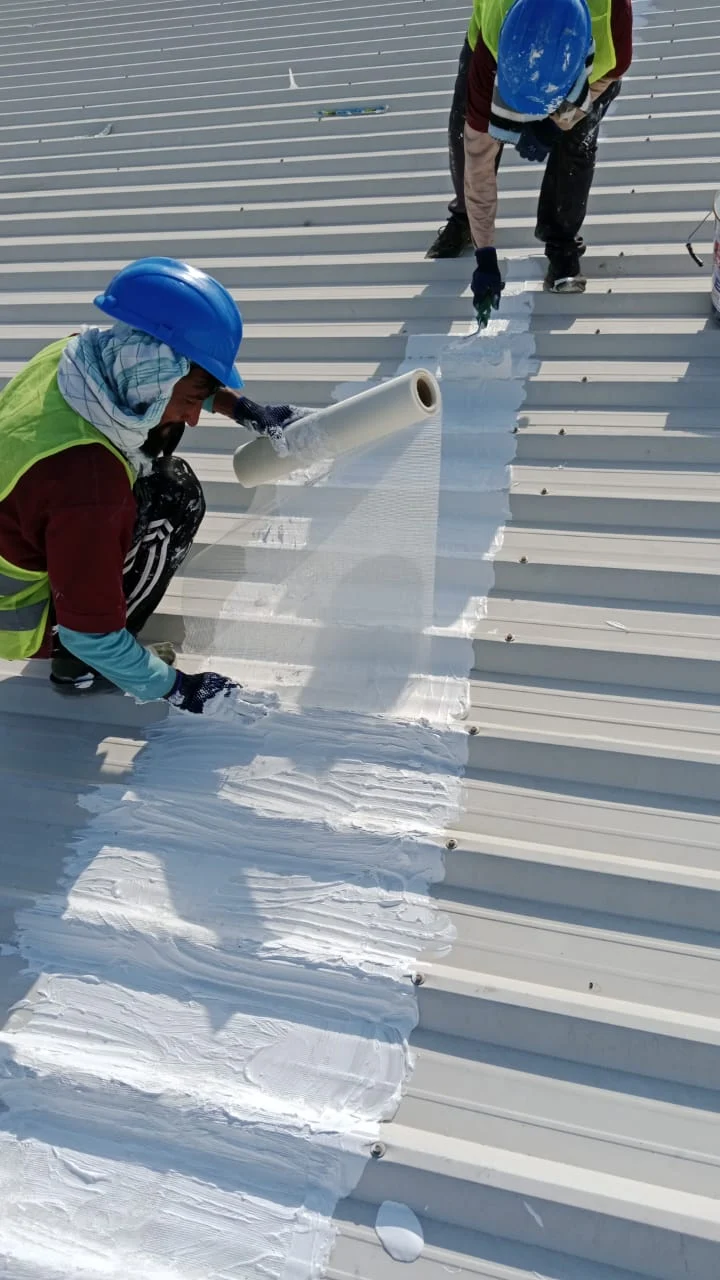
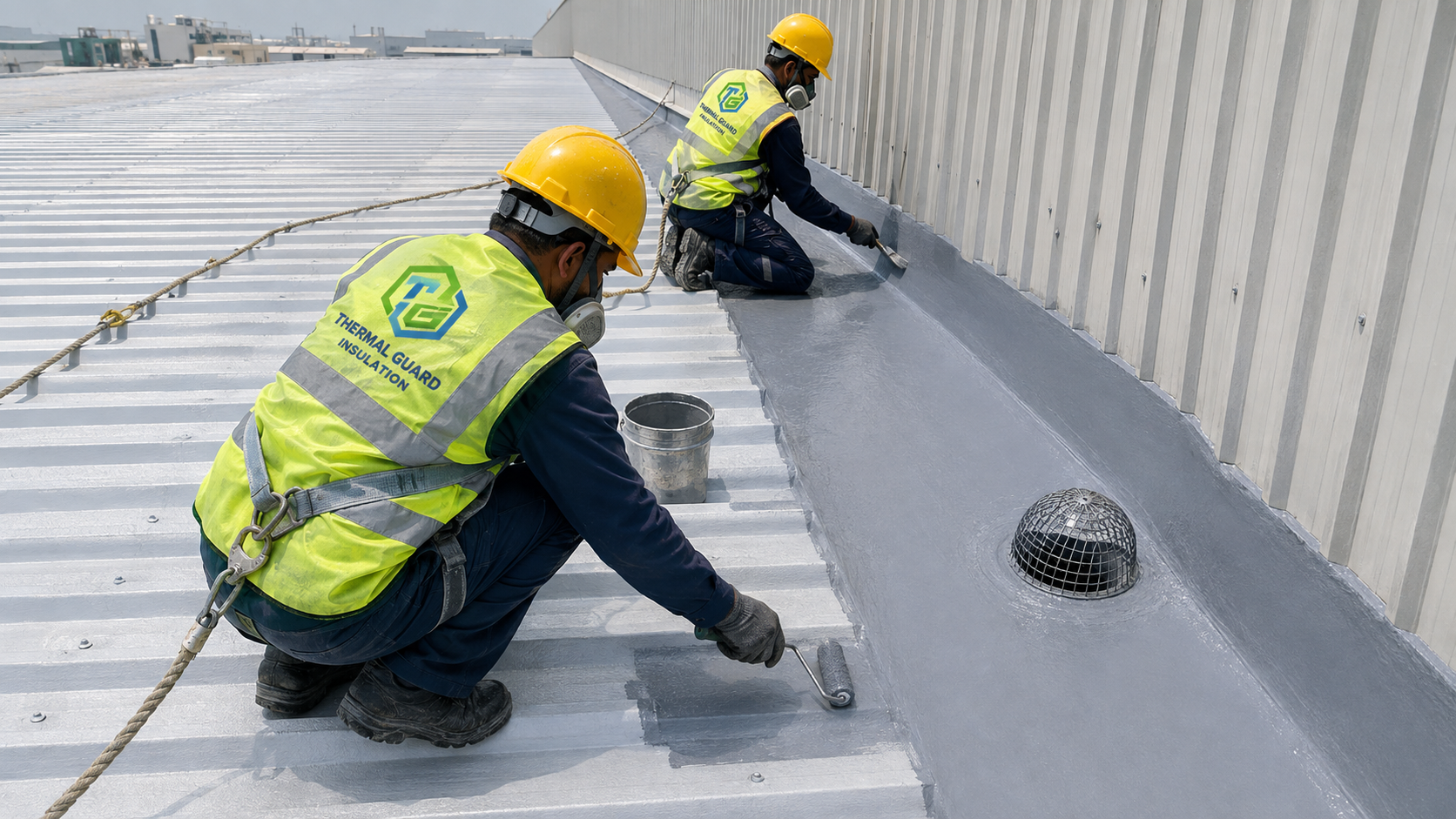
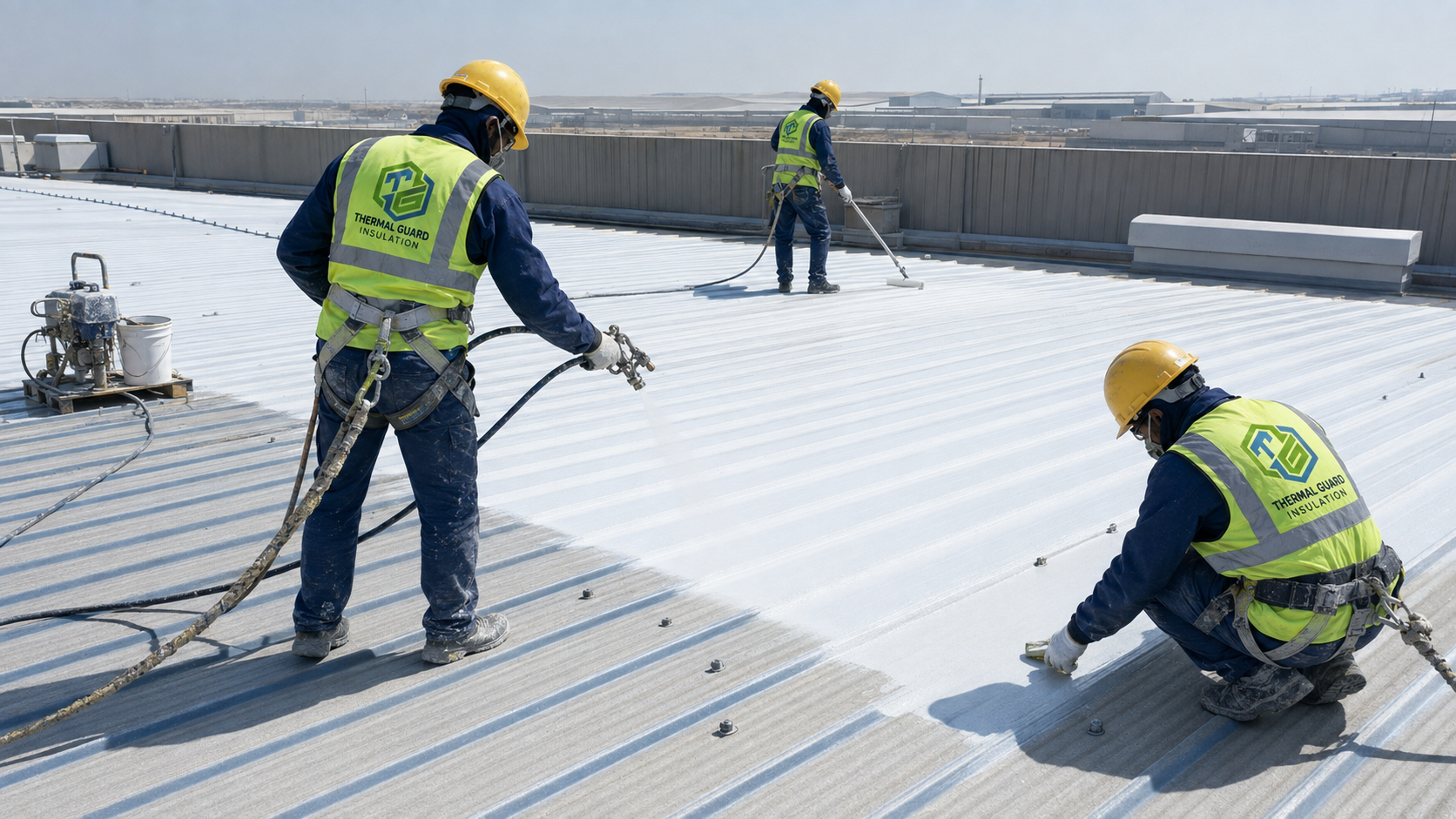
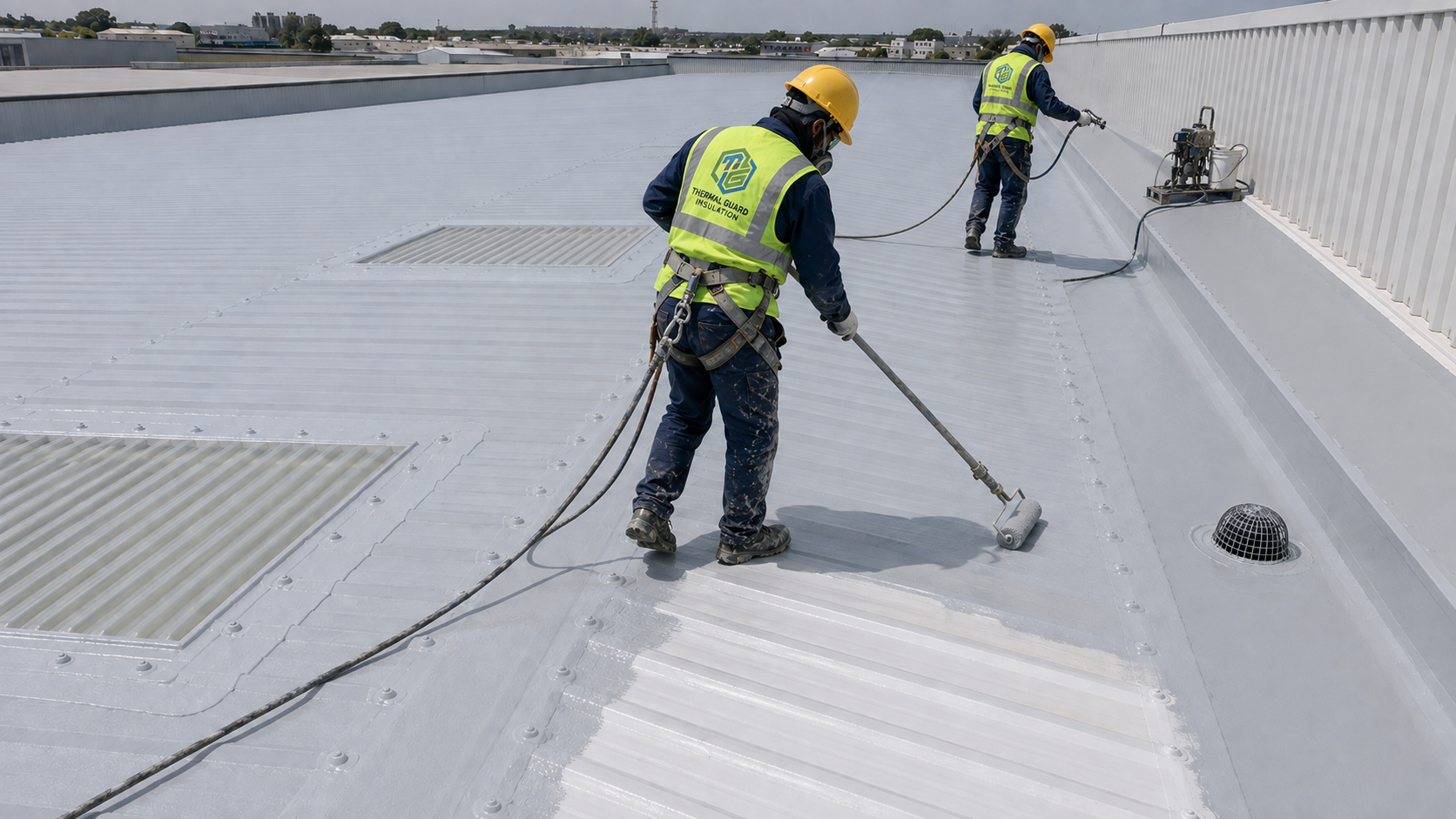
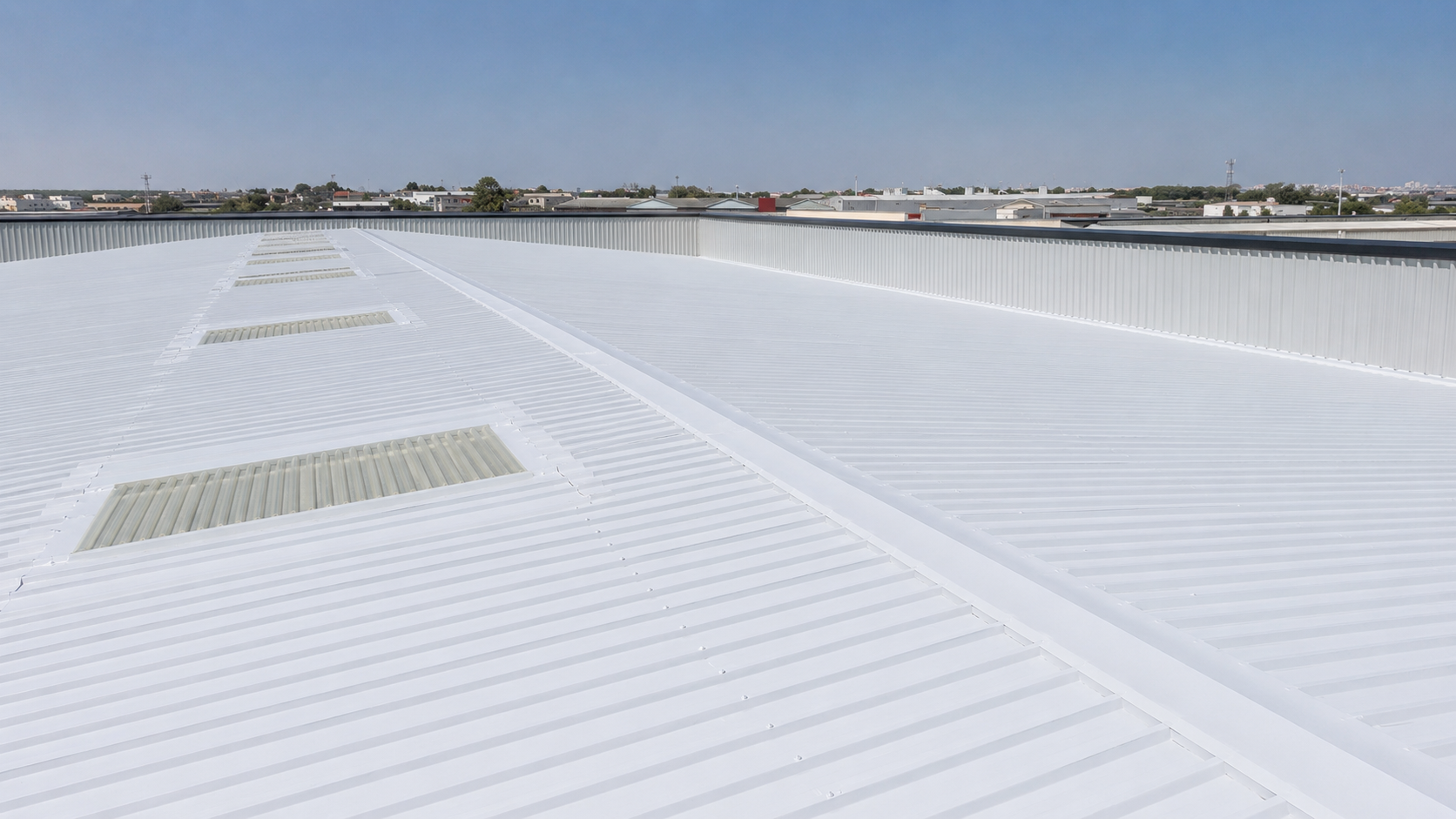
Typical Corrugated Roof Waterproofing Process
- Inspect sheets, laps, fasteners, gutters, flashings, skylights and penetrations
- Pressure-wash and mechanically clean the complete roof
- Remove corrosion and replace damaged sheets or loose fasteners
- Apply compatible anti-corrosion primer to prepared metal
- Seal screw heads, penetrations and defective joints
- Reinforce sheet laps, gutters and skylight perimeters with approved fabric
- Apply the specified flexible base coat over all detailed areas
- Apply intermediate and finishing coats to the required consumption and thickness
- Inspect continuity, adhesion and drainage before final approval
Important Metal-Roof Requirements
The final system must account for corrosion, metal expansion and contraction, wind uplift, unsupported corrugations, roof slope, drainage, condensation, existing-coating compatibility and access traffic. Damaged sheets and loose fasteners must be repaired before waterproofing, and structural movement joints must remain functional.