
Planter Waterproofing
Complete waterproofing systems developed for roof planters, podium planters, raised concrete planters and landscaped areas exposed to soil, irrigation water and root growth.
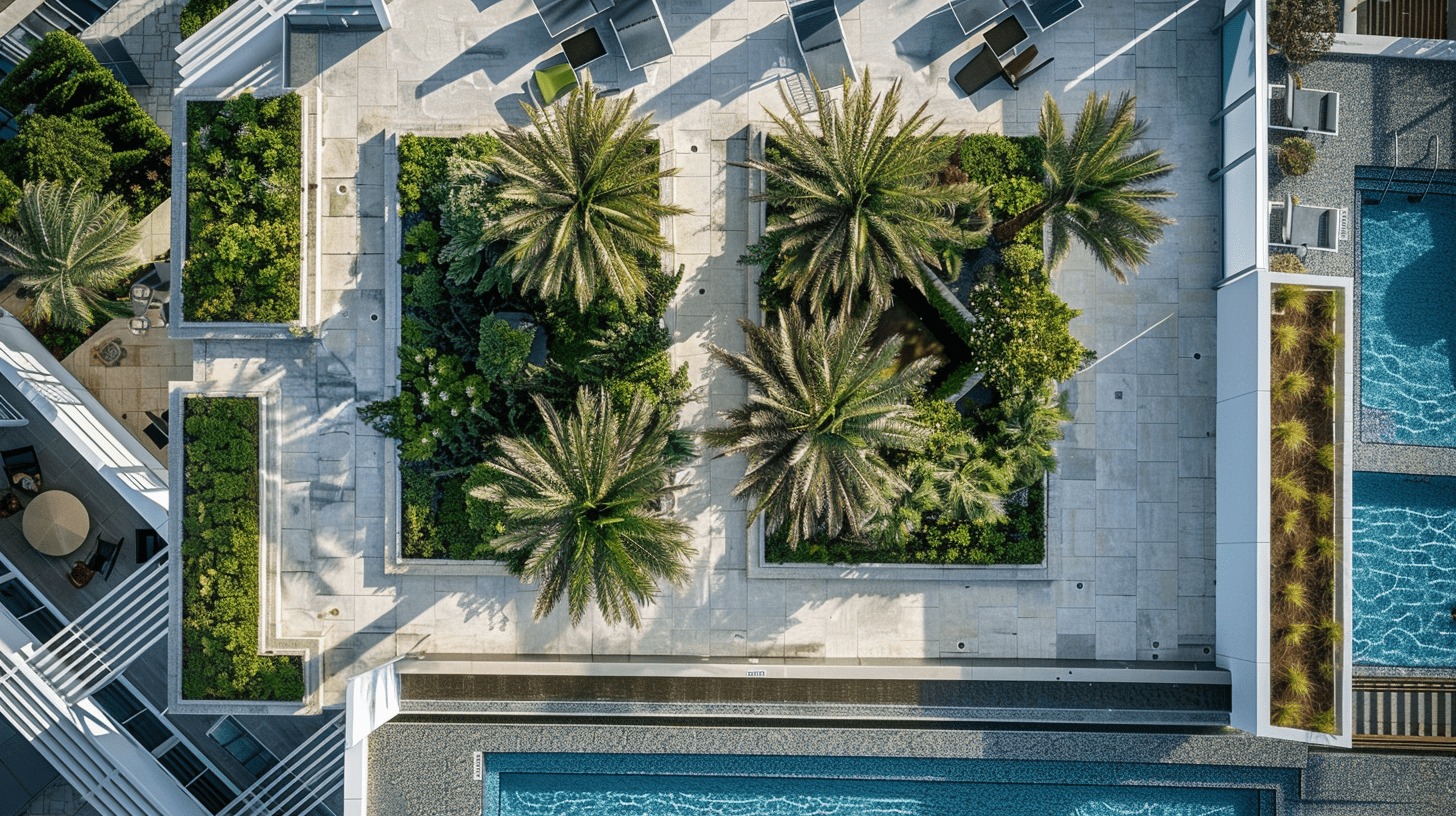
Continuous Waterproofing Beneath Soil and Landscaping
Our planter waterproofing systems protect concrete bases, walls, junctions, outlets and penetrations from continuous soil moisture, irrigation water and root growth. Each installation coordinates waterproofing, root resistance, membrane protection, drainage and filtration.
Planter Waterproofing Systems in Dubai
Thermal Guard Insulation Contracting LLC provides waterproofing for landscape planters, roof planters, podium planters, raised concrete planters and other soil-retaining structures throughout Dubai and the UAE.
A complete planter build-up normally includes a root-resistant waterproofing layer, secure terminations, drainage outlets, membrane protection, drainage cells or boards, geotextile filter fabric and approved growing medium. Open a system below to review its application process and advantages.
Short description
Prefabricated APP- or SBS-modified bituminous sheet membranes installed by torch application or as a self-adhesive system. For planter use, the selected membrane must incorporate certified anti-root properties or be combined with an approved root-barrier layer.
Application process
- Clean, dry and repair the concrete base and walls.
- Form smooth coves at internal corners and confirm falls toward drainage outlets.
- Apply the approved bituminous primer and allow it to dry completely.
- Install reinforcing strips at corners, outlets, joints and penetrations.
- Torch-bond or self-adhere the membrane with the specified sealed side and end laps.
- Turn the membrane up the planter walls and terminate it securely above the soil level.
- Inspect the laps and details, then conduct the specified water-tightness test.
- Install protection board or drainage cell, geotextile filter fabric and growing medium.
Advantages
- Reliable root resistance when a certified anti-root grade is selected.
- Strong puncture and mechanical resistance.
- Durable and suitable for concealed long-term applications.
- Reliable detailing around concrete walls, bases and outlets.
- Suitable for roof, podium and large structural planters.
Short description
A polymer-modified cementitious waterproofing coating applied as a bonded slurry over concrete planter bases and walls. It forms a seamless, flexible layer that adheres strongly to damp cementitious substrates. Because ordinary cementitious coatings are not inherently root-resistant, an approved anti-root barrier and protection system must be installed where required.
Application process
- Clean the concrete and remove laitance, dust, oil and loose material.
- Repair honeycombs, cracks and uneven areas and confirm falls toward the drainage outlets.
- Form cementitious angle fillets at wall-to-base junctions.
- Pre-wet the substrate to a saturated-surface-dry condition or apply the specified primer.
- Reinforce corners, joints, cracks, outlets and penetrations with compatible tape, mesh or collars.
- Mix and apply the first flexible cementitious coat uniformly by brush, roller or trowel.
- Apply the second coat perpendicular to the first after the specified waiting period.
- Achieve the required consumption and cured thickness, then allow complete curing.
- Conduct the specified water-tightness test and repair and retest any defective areas.
- Install the approved anti-root barrier, protection layer, drainage cell and geotextile before adding soil.
Advantages
- Strong adhesion to concrete, screed and cementitious repair mortar.
- Can be applied to properly prepared damp substrates.
- Seamless application around corners, outlets and penetrations.
- Flexible grades accommodate minor non-structural movement.
- Easy to detail in small or irregularly shaped planters.
Short description
A liquid-applied polyurethane membrane that cures into a seamless, flexible and rubber-like waterproof layer. It conforms closely to complex planter geometry; a root-resistant PU grade or compatible anti-root barrier must be provided as required by the approved system.
Application process
- Prepare a clean, dry, sound and smooth concrete substrate.
- Repair cracks and defects, form angle fillets and confirm drainage falls.
- Apply the compatible PU primer at the specified coverage rate.
- Reinforce corners, cracks, joints, outlets and penetrations with approved fabric, tape or collars.
- Apply the first PU membrane coat uniformly by roller, brush or approved spray equipment.
- Apply the second coat in a perpendicular direction and add further coats where required for thickness.
- Allow complete curing, inspect the coating and conduct the specified water-tightness test.
- Install a root barrier where required, followed by protection board, drainage cell and geotextile.
Advantages
- Creates a seamless membrane without sheet laps or welded joints.
- High flexibility and good crack-bridging performance.
- Conforms to irregular planter shapes and congested details.
- Provides continuous coverage around outlets and penetrations.
- Suitable for both new construction and refurbishment work.
Short description
A seamless liquid-applied waterproofing system formulated from flexible rubberised or acrylic polymers and specifically approved for resistance to root penetration. After curing, it forms a continuous elastic barrier over planter bases, walls and complex details.
Application process
- Clean and repair the concrete planter surfaces and confirm drainage slopes.
- Form angle fillets and seal cracks, joints, outlets and pipe penetrations.
- Apply the system-approved primer and allow it to dry.
- Install reinforcing fabric or liquid detailing at corners, junctions, outlets and penetrations.
- Apply the first anti-root liquid membrane coat uniformly over the base and walls.
- Apply the remaining coats in cross-directions to achieve the specified consumption and dry-film thickness.
- Continue the coating above the finished soil level and complete secure top terminations.
- Allow full curing, inspect and conduct the specified water-tightness test.
- Install protection board, drainage cell and geotextile without puncturing the coating.
Advantages
- Combines waterproofing and root resistance in one approved liquid system.
- Seamless finish with no sheet overlaps or welded joints.
- Excellent coverage around complex corners, curves, outlets and penetrations.
- Flexible and capable of accommodating minor substrate movement.
- Suitable for roof, podium, landscape and raised concrete planters.
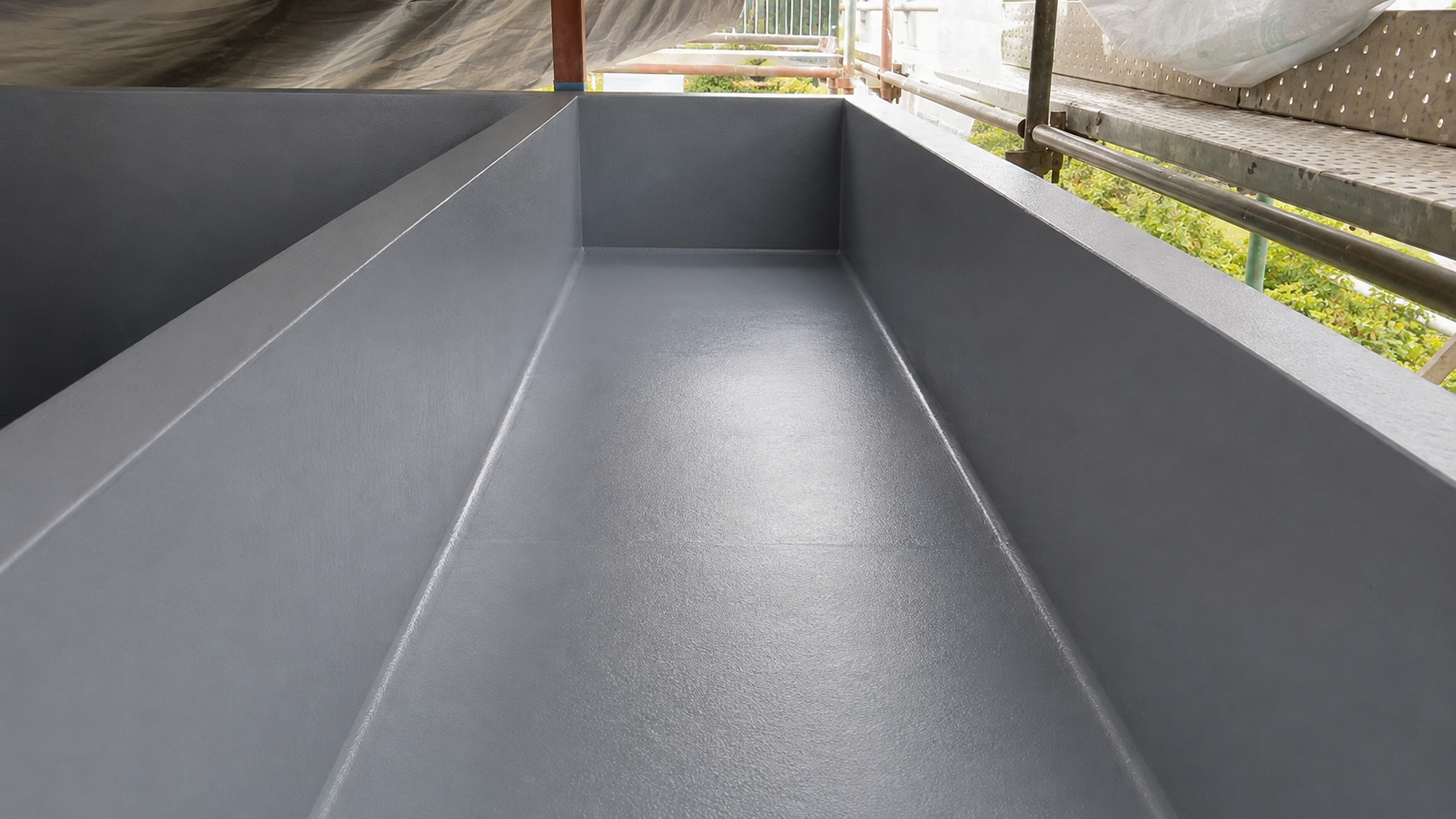
Planter Waterproofing Gallery
Click an image to view the application and completed finish in full size.
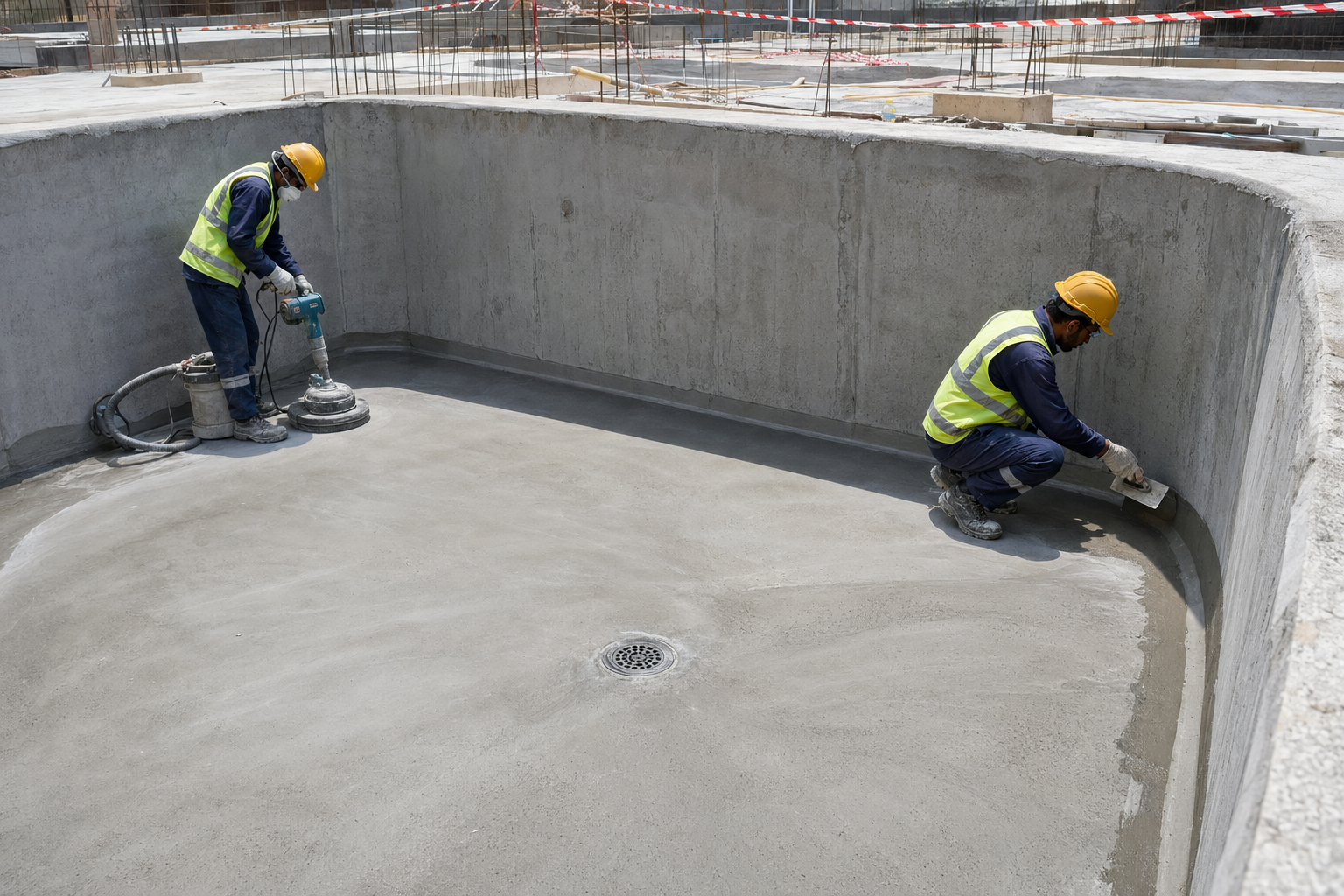
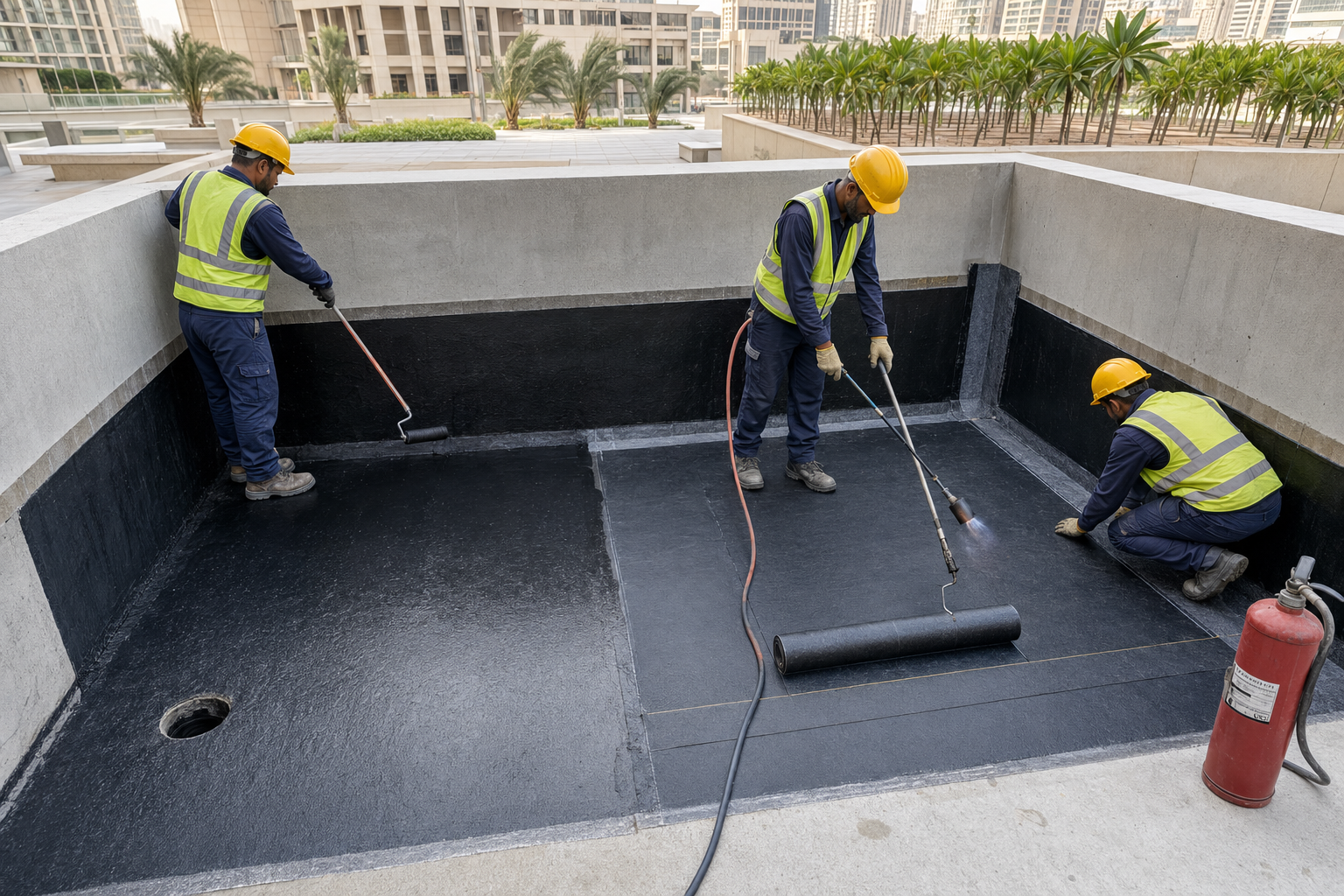
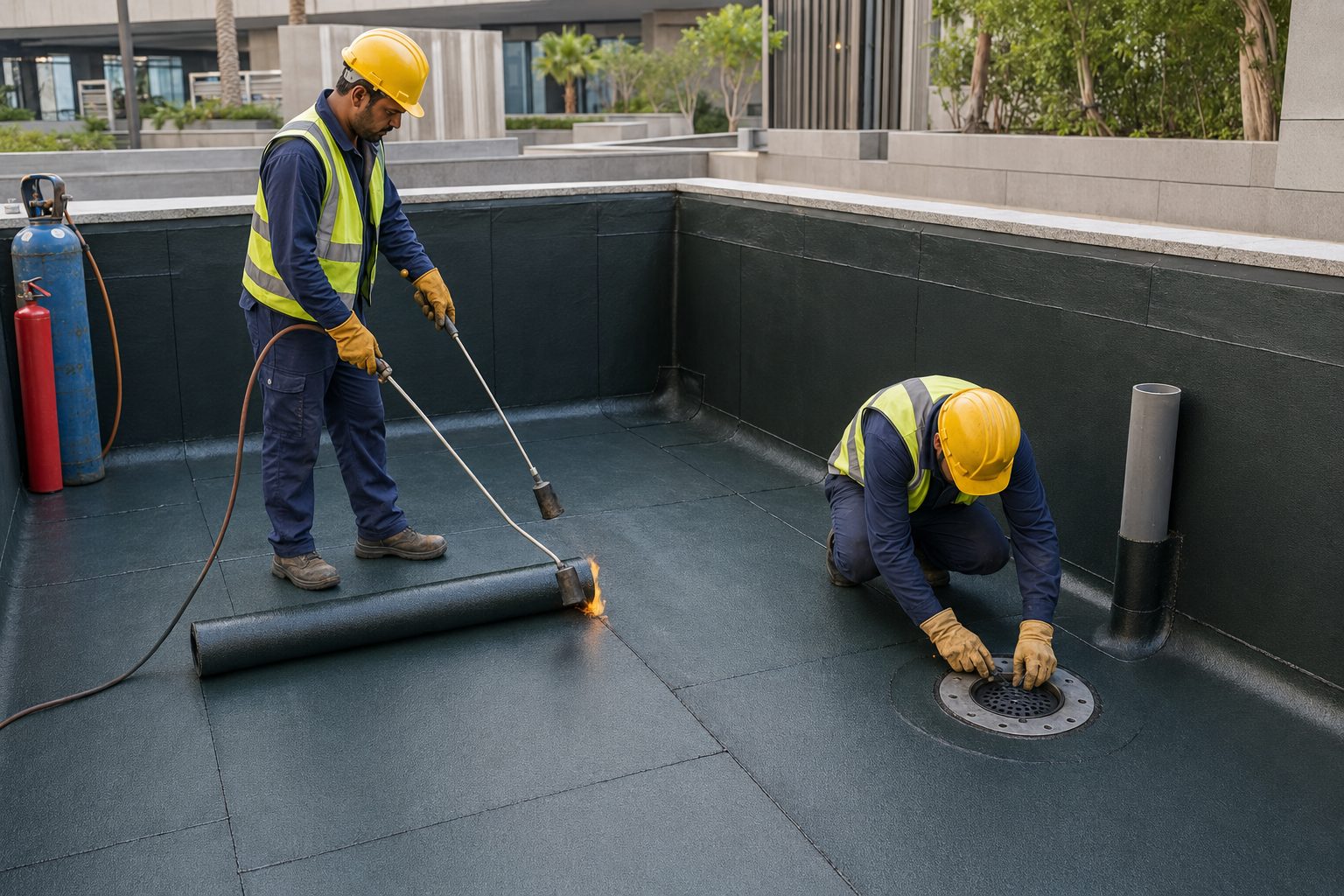

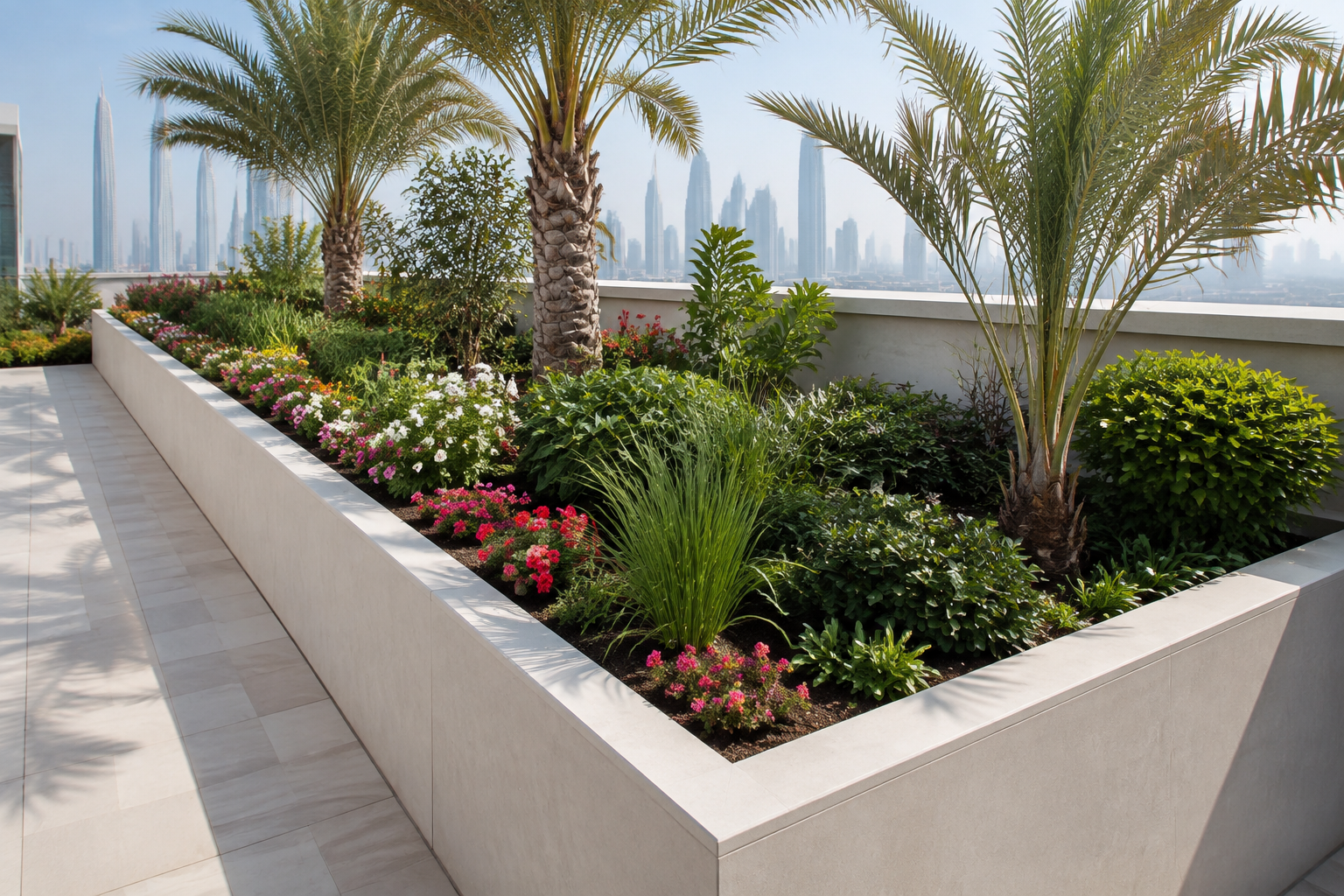
Flexible Cementitious Coating Gallery
Click an image to view the application and completed finish in full size.

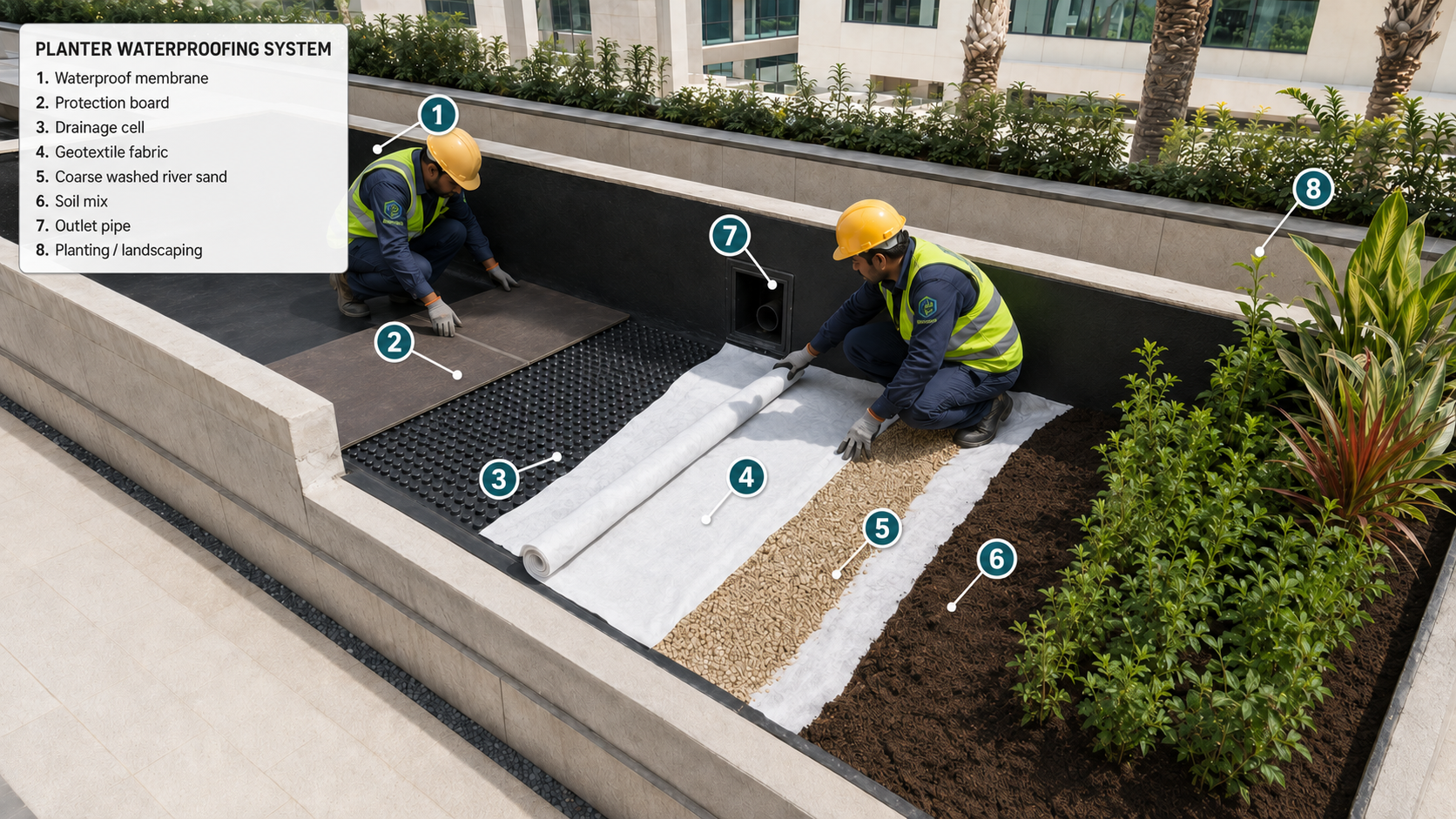
Typical Planter Waterproofing Build-Up
- Prepared and repaired reinforced-concrete planter
- Angle fillets at wall-to-base junctions
- Compatible primer where required
- Approved root-resistant waterproofing membrane
- Reinforced detailing at outlets, corners and penetrations
- Water-tightness test after complete curing
- Protection board or compatible protection layer
- Drainage cell or dimpled drainage board
- Geotextile filter fabric
- Approved growing medium and landscaping
Important Planter Waterproofing Requirements
The waterproofing must continue up the planter walls and terminate securely above the finished soil level. Drainage outlets must remain accessible and protected from blockage. Root resistance, material compatibility, protection, drainage capacity and geotextile selection must be approved before soil is placed.